
gokyo-valley-trek
Gokyo Lakes and Renjo La Pass Trek - 12 Days

Gokyo Lakes and Renjo La Pass Trek - 12 Days

48 Reviews in TripAdvisor
52 Reviews in Google

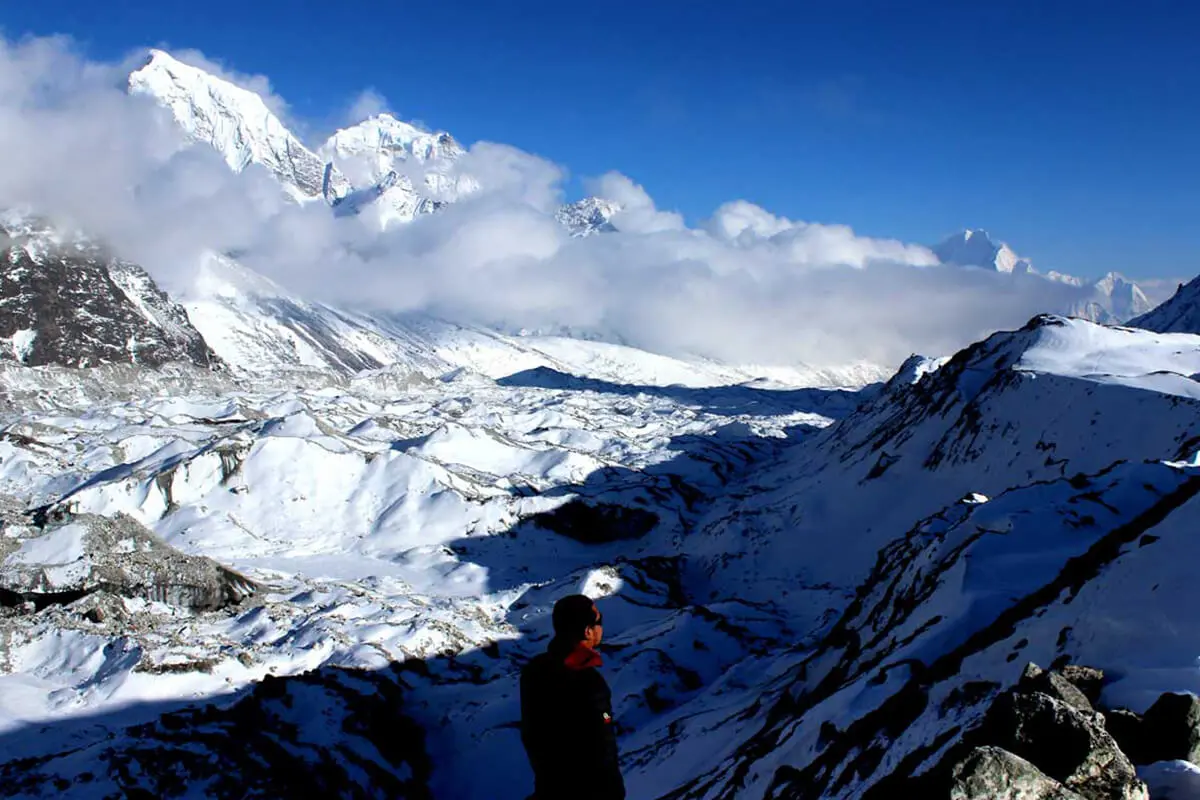
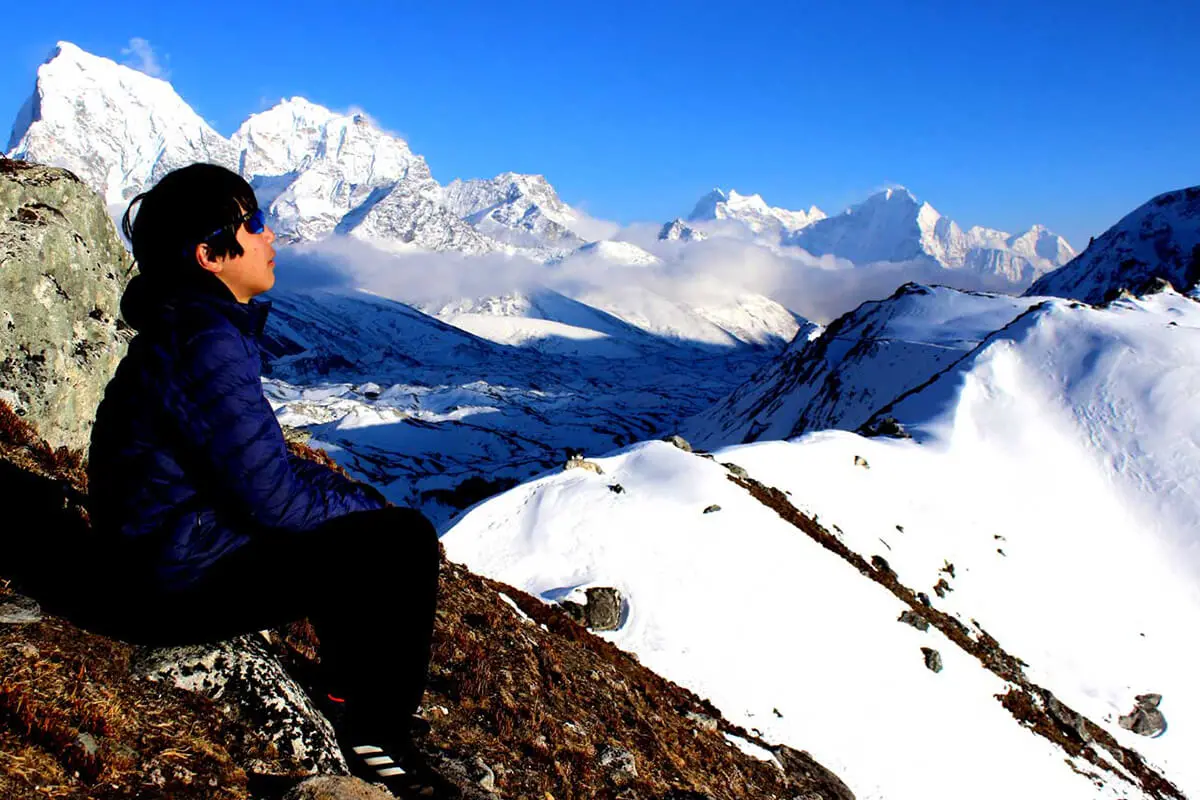
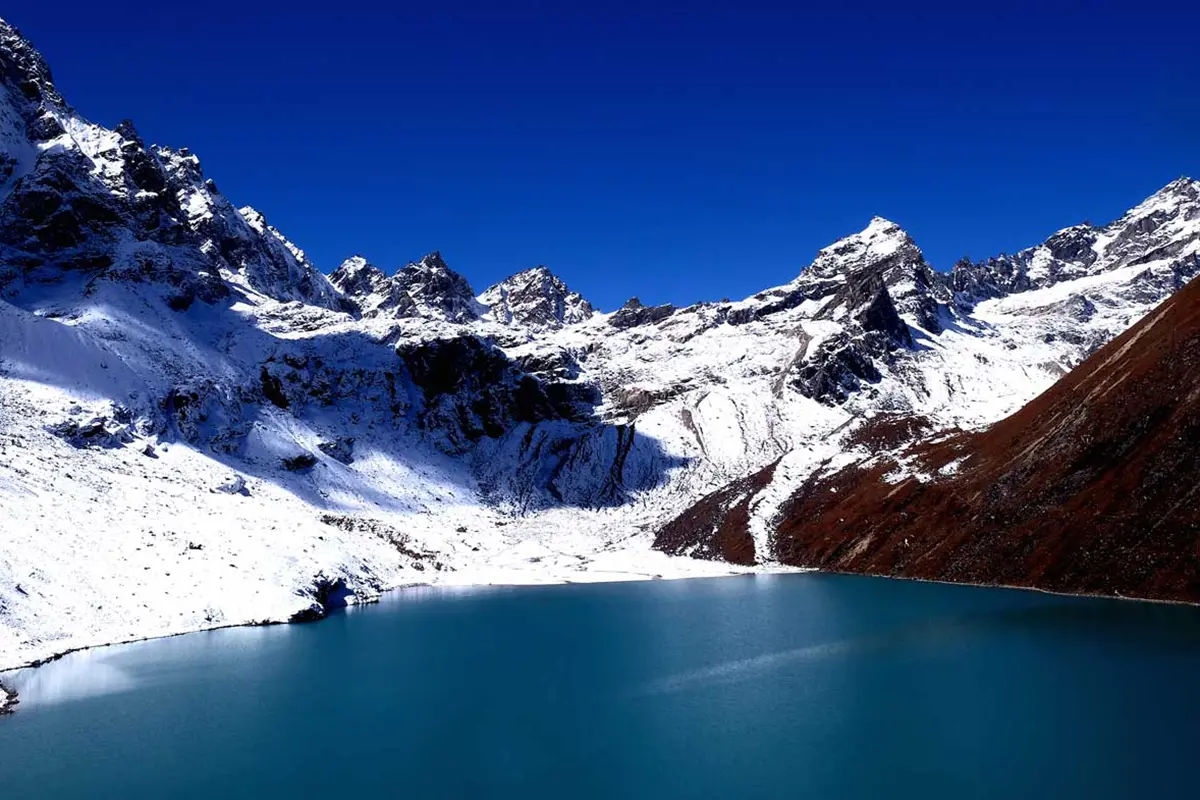
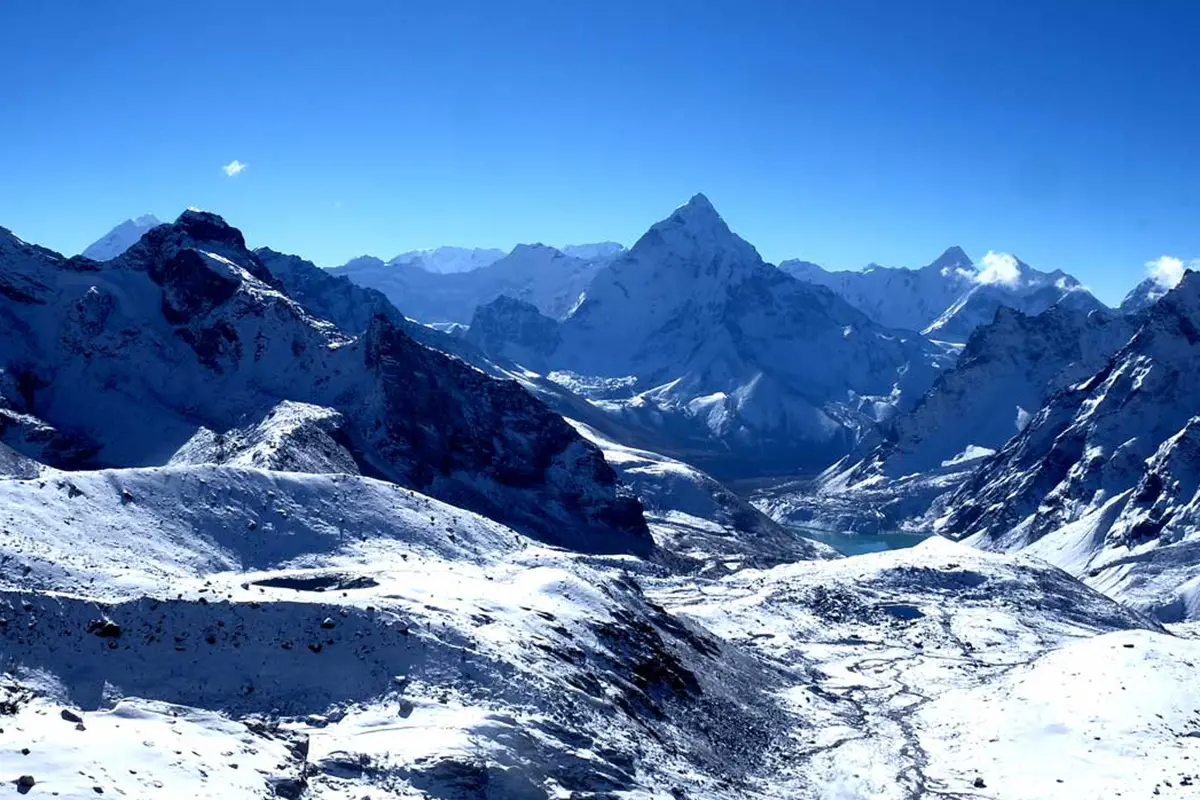
Gokyo Lakes combine with Renjo la Pass is among the most exotic treks on the less-crowded virgin mountain trails. On this trek we can explore and discover the beautiful Khumbu region with exclusive opportunity to witness the best lakes in the Himalayas, the highest mountains, Sherpa cultures, and, most importantly, it provides us with the opportunity to create wonderful memories in the foothills of the highest Himalayas. However, visits to Gokyo lakes and the magical panoramic views from Gokyo Ri mark the major highlights of this Everest Gokyo Lake Trek. From Goyko Ri, the views are awesome, including Mt. Everest (8,848 m).

Trip Facts

Highlights

  • Scenic flight to Lukla (gateway to any trek to Everest Region ) with dramatic aerial views of the Himalayas
  • Walkthrough the Sagarmatha National Park, crossing many suspension bridges, experience Sherpa Culture and tradition.
  • Less crowded, adventurous trek route to the stunning Gokyo Valley
  • Witness breathtaking views of the snow-capped mountains, glaciers, and valleys including Mount Everest and 360 degree of Himalaya ranges 
  • Pass by chortens, stupas, and colorful prayer flags
  • Get to see the daily lifestyle of Sherpas and other mountain people from different communities
  • Explore picturesque Gokyo villages and lovely Gokyo Lakes
  • Hike to Gokyo Ri and cross challenging high Renjo La pass
  • Trek with a team of highly experienced guides who have more than two decades of experience organizing treks in the Himalayas
  • The landscapes including the Himalayan panorama views with fresh water lakes of Gokyo and the views of deep Dudh Koshi river valley integrated perfectly with the lush vegetation of kumbu region 
  • Gokyo Treks takes us to all the major villages of Khumbu, where the unique Sherpa culture prevails over nature and lifestyle can be  experienced.
  • The incredible floral and faunal biodiversities of Sagarmatha National Park, enchanting with beautiful lakes and climbing to Gokyo RI Peak - 5360m

Gokyo Lakes and Renjo La pass trek is a perfect alternative trekking trail in the Khumbu region for travelers who prefer empty trails and unspoiled views. Unlike the famous Everest Base Camp Trek, you will be following a different route that leads to the stunning Gokyo Valley and crosses the high Renjo La pass (5,360 m/17,585 ft). Gokyo Lakes and Renjo La Pass Trek 12 days is an adventurous trek that offers an off-the-beaten trekking experience and you can have a awe-inspiring view of hundreds of pleasing scenery.  This trekking route in Everest region is less crowded, Scenic, slightly easier alternative route to Everest Base Camp trek and It offers magnificent view of the mountain peaks and the , the largest glacier in the Nepal Himalayas (Ngozumpa Glacier). It includes most popular mountains views of the northwest face of Mt. Everest (8848m), set amongst other giants like Mt. Cho-Oyo (8201m), Mt. Lhotse (8501m), Mt. Makalu (8463m) etc. which are clearly visible in a panorama from Gokyo Ri (5483m) above Gokyo Lake.

Gokyo Lake combine with Renjola pass route is designe for those who have a limited time to discover the most famous beauties of Khumbhu region. Set amongst breath-taking high mountain scenery, the route leads through the Sherpa community. We can just do Goky lake tek without Renjo la Pass trek as an aktrnative itinerary which is comparatively shorten with out high pass. Trekking mountain trails to Gokyo is a gradual ascent up the valley passing through patches of birch and rhododendron forest where the elusive musk deer can sometimes be seen. Through small yak-grazing settlements, we reach the Gokyo lakes. Gokyo Lakes and Renjo La Pass trek journey begins with a thrilling mountain flight to the tiny mountain airstrip at Lukla, the major gateway to the Everest region. Meet our trekking team and sort the gear before making our way along the banks of the Dudh Koshi River to Phakding and on to Namche Bazaar. Namche is one of the most attractive settlements in the Khumbu region, which offers restaurants, cyber cafes, bakeries, ATMs, and more. Spend one more night for acclimatization. We take the opportunity to make short acclimatization treks up to Khumjung, a lovely Sherpa village above Namche, and to The Everest View Hotel, from where there are wonderful panoramic views of Everest, Ama Dablam, Thamserku, Nuptse, Lhotse, Tawche, and Kwangde. Then on to the villages of Dole and Machhermo, which lead us to Gokyo Valley. On the way, look for rare wildlife species such as musk deer, wild mountain goats, snow leopards, mountain hawks, and others. From Gokyo, we can see a spectacular array of alpine lakes and supreme mountains.A pre-sunrise hike to Gokyo Ri ensures an unparalleled panoramic view of Mt. Everest (8,848 m), Lhotse (8,156 m), Cho Oyu (8,201 m), Makalu (8,585 m), Ama Dablam (6,82 m), Thame Peak, and others. The vast, rubble-covered Ngozumpa Glacier at the foot of Cho Oyu is breathtaking. As you reach the stunning Gokyo Ri back to Gokyo lake and explore and prepare for the next day's ascend towards for the challenging Renjo La PassRenjo La Pass which is at 5360 m elevation, and reach Lunden. Renjo Pass route is off the usual beaten track. At the pass, a great view of the Gokyo lakes on one side, the RermoPokhari lakes on the other side, and surreal view of the Himalayas in the background. Crossing Renjo La Pass is quite challenging part of the trek; we climb at a steady pace to avoid any effects of altitude. From the pass, we now make our way to Thame and then to Namche Bazar. Retracing your steps along the way to Lukla, you will spend your final night there before flying back to Kathmandu. 

What is the difficulty level of the Gokyo Lake and Renjo La Pass Trek?

Often, those who are planning to do Gokyo lake and Renjo La Pass Trek have a common question about the difficulty levels of Ranjo La hiss Pass. This trek is alternative choice for trekkers who have already done Everest Base Camp Trek except for the three high passes trek. If you have already crossed Kongma La Pass and Chola Pass, you should not feel such a challenge for Renjola Pass due to the less vertical trail up to the top and wider paved steps that descend to the Marlung after the pass. It does not mean that the Ranjo La pass isn't hard; however, compared to the length of the Kongma La traverses or crossing the glacier on Cho La, this pass doesn't physically challenge the hikers.

Even while hiking up Gokyo Ri, you may find the vertical trail to be the most challenging, but you won't experience the same level of difficulty while trekking to Ranjo La Pass. Some trekkers come from the Thame to cross the Ranjola Pass and for the Everest, Three Passes Trek, but according to our experience and Trekking Plus expertise as well as our guest feedback, we advise you to cross from the Gokyo side to do the circuit via Ranjola Pass. You always need to respect nature, which means walking steadily and slowly and taking enough rest from the past.

What makes Trekking Plus unique?

Trek to Gokyo Lakes with us and enjoy trekking in the Everest region freely. Our experienced team and well-made Gokyo Lakes and Renjo La pass trek itinerary will keep you safe and sound while trekking. Along with that, you will be getting the best deal of Gokyo Lakes and Renjo La pass trek with us. We are transparent with our charges and policies and have no hidden fees, we deliver what we say. Our mission is to make the trek safe and successifuly. Join one of our 2026 | 2027 departures for the Gokyo Renjo La pass trek or we are happy to organize your custom based private trek too.

A Typical Day on Gokyo Lake Trek

Trekking in the Himalayas, trekkers get up in the morning with stunning mountain views at their hotel windows and enjoy a hot breakfast at the lodge. After breakfast, the trekkers pack their things and start a day. The trails vary from easy to strenuous, often with gentle slopes and steep ascents. Generally, trekkers walk anywhere from 5-8 hours daily, depending on the itinerary. One can always stop and rest at various spectacular views or, besides that, local teahouses. Lunch is usually taken en route and normally consists of local recipes. At the end of a day’s trek, the trekkers generally reach their next destination by late afternoon or early evening. They freshen up and sit around the dinner table, narrating the day’s tales. Most days end with relaxation among fellow trekkers or explore around the nearby areas. At night, the trekkers prepare for a night’s sleep to rise fresh the next morning to see another brilliant day among these awesome landscapes.
Itinerary Overview and Route Map

Day 1:Fly to Lukla from Kathmandu (1400 m/ 4593 ft.) and trek to Phakding (2610 m / 8563 ft.), Distance: 8km, 35 minutes flight & 3-4 hours trek
Day 2:Trek from Phakding to Namche Bazaar (3,440m/11,280ft), Distance: 10.5 km, 6-7 hrs trek.
Day 3:Namche Bazaar -Acclimatization and exploration day.
Day 4:Trek from Namche Bazar to Dole (4,110m/13,152ft), Distance: 11km, 5-6 hrs trek.
Day 5:Trek from Dole to Machhermo (4,470m/14,663ft), Distance: 7km, 4-5 hrs trek.
Day 6:Trek from Machhermo to Gokyo (4790m./15711ft.), Distance: 7km, 3-4 hrs trek.
Day 7:Acclimatization in Gokyo village: Hike to Gokyo Ri (5360m./17580ft.), Distance: 3.8 km, 3 - 4 hrs
Day 8:Trek to Lungden (4,380 m / 14,370 ft.) via Renjo La pass Renjo La pass (5,360m./17,581ft.), Distance: 9 km /4.97 miles,
Day 9:Trek to Thame (3,750 m / 12,303 ft.) from Lungden/Lumde, Distance: 10 km /6.21 miles, 6-7 hrs walk.
Day 10:Trek to Monjo (2,765 m /9,072 ft) from Thame, Distance: 13 km /8.08 miles, 5-6 hrs walk.
Day 11:Trek to Lukla (2860 m/ 9383 ft.) from Monjo, Distance: 13 km, 8.08 miles, 5-6 hrs walk.
Day 12:Lukla to Kathmandu flight (1400m./4593ft.), 35 minutes Scenic Flight,

Gokyo Lakes and Renjo La Pass Trek - 12 Days Detailed Itinerary

Day 1

Fly to Lukla from Kathmandu (1400 m/ 4593 ft.) and trek to Phakding (2610 m / 8563 ft.), Distance: 8km, 35 minutes flight & 3-4 hours trek

After breakfast, transfer to the Domestic Airport for the Trans Himalayan flight and dramatic landing on the hillside at Lukla: gateway to the Khumbu/Everest region. Meet your local porters and walk downhill to the Sherpa settlement of Cheplung. The trail then follows the side of the Dudh Koshi Valley before ascending to Ghat (2 530m/8 350ft). Another gentle hour leads up to Phakding.

Max Altitude: 2,613m (8,572ft)
Meals: B,L,D
Duration: 3-4 hrs
Distance: 8
Accommodation: Mountain Lodge
Day 2

Trek from Phakding to Namche Bazaar (3,440m/11,280ft), Distance: 10.5 km, 6-7 hrs trek.

The trail meanders through pine forest, along the Dudh Koshi River, crossing many suspension bridges via the Sherpa villages of Benkar, Chumoa, Monjo and Jorsale: entrance to the Sagarmatha National Park and permit checkpoint, with tranquil views of glistening Thamserku (6,618m/21,714m). The trail continues along the riverbed to the confluence of the Bhote and Dudh Koshi Rivers. It then climbs steadily, crossing the high Tenzing- Hilary suspension bridge with inspiring glimpses of Everest and the Nuptse – Lhotse ridge. A final three hour ascent through pine forest leads to the prosperous trading and administrative town of Namche Bazaar.

Max Altitude: 3,440m (11,286ft)
Meals: B,L,D
Duration: 6-7 hrs
Distance: 10.5
Accommodation: Mountain lodge
Day 3

Namche Bazaar -Acclimatization and exploration day.

Today is acclimatization day on the trek. Acute Mountain Sickness (AMS) and health experts recommend a stop for at least one extra night. Be active and roam rather than laze around: climb high and sleep low is the acclimatization advice.  A rest day in Namche Bazar is crucial to give your body the break it needs to adjust to the altitude. Early morning , we hike to the Everest View Hotel (3,962m./12,998ft.) for an awesome panorama of Mt. Everest, Lhotse, Tawache, Kwangde Peak, Kusum Peak, Kangaru Peak, and other peaks.  Or, you can stay in your hotel and visit the Namche Village in the evening. There’s a local museum, school, classic village, and a large market you can visit in the daytime. 

Max Altitude: 3,440m (11,286ft)
Meals: B,L,D
Duration: 3-4
Accommodation: Mountain Lodge
Day 4

Trek from Namche Bazar to Dole (4,110m/13,152ft), Distance: 11km, 5-6 hrs trek.

The day begins early with a warm breakfast. The trail from Namche Bazar ascends steeply, and soon you will be walking on a flat path to Sanasa. The trail climbs up from the town and then contours around the hillside, offering great views including Everest and Khumjung. It then ascends along the lower slopes of Khumbila, branching northwest of the Everest trail and continuing up the Dudh Koshi Valley. It climbs steeply to the tiny village of Mong La (built around an ancient chorten), then drops to Phortse Thenga before climbing through a pine and rhododendron forest and on up to Dole – from where there are marvellous views of snow capped peaks. Look out for spotted deer, Himalayan Tahrs and birds – including the colourful (male) Danphe pheasant (Nepal’s national bird). Overnight in Dole.

Max Altitude: 4,110m (13,484ft)
Meals: B,L,D
Duration: 5-6 hrs
Distance: 11 km
Accommodation: Mountain Lodge
Day 5

Trek from Dole to Machhermo (4,470m/14,663ft), Distance: 7km, 4-5 hrs trek.

After breakfast, we start our short hike to Machhermo helps us acclimate before entering the highlands of Gokyo. The tiny village has new lodges that remain empty most of the year. The people of Khumjung and Khunde often use the land of Machhermo to graze their cattle. You can see many yaks and sheep in the summer in these highlands. Breathtaking views of Cho-Oyo, Thamserku and Kangtega are countered by charming views into the valley below where we pass summer-grazing hamlets such as Luza that lead up to Machhermo. The Machhermo Khola flows through the village of Kyajo Ri and Pharilapche before draining into the Dudh Koshi. This is the last settlement before Gokyo and has a HRA aid post for victims of AMS.

Max Altitude: 4,470m (14,665ft)
Meals: B,L,D
Duration: 4-5 hrs
Distance: 7
Accommodation: Mountain Lodge
Day 6

Trek from Machhermo to Gokyo (4790m./15711ft.), Distance: 7km, 3-4 hrs trek.

Afater breakfast, we trek to Gokyo lake. Begin climbing on a steep path that leads to a ridge above Machhermo.The trail rises gently from the village to a ridge that offers the first views of the north face of Cho-Oyo (8,210m/26,907ft) and more views of Kangtega and Thamserku. Ahead in the valley is the snout of the Ngozumpa Glacier: the trail drops back towards the river. At the hamlet of Pangka it meets an alternative route from the south before climbing onto the side of the moraine. A metal bridge crosses the edge of the frozen Longponga Tsho (4,690m/15,383ft): the first of the Dudh Koshi’s six sacred lakes. Before Taboche Tsho, a path leads up onto the glacier – and the Cho La. A strenuous half hour’s walk beyond the lake is the summer village of Gokyo set on the side of the moraine and overlooking the blue-green Dudh Pokhari which nestles in a semi circle of high peaks at the foot of Gokyo Ri. Cho-Oyo and the ice ridge to Ghyachung Kang, from which the Ngozumpa glacier flows, are clearly visible behind ridges.The trail further heads to Pangka and continues towards Nilibuk. From here, you will again ascend following a narrow staircase to a small bridge. Further, the trail passes by the lake and reaches Gokyo valley.

Max Altitude: 4,790m (15,715ft)
Meals: B,L,D
Duration: 3-4 hrs
Distance: 7
Accommodation: Mountain Lodge
Day 7

Acclimatization in Gokyo village: Hike to Gokyo Ri (5360m./17580ft.), Distance: 3.8 km, 3 - 4 hrs

To spend your rest day in Gokyo village, you will go on a hike to Gokyo Ri (5,360m/17,586ft) which begins on the northern side of the lake, opposite the village. The first is Its panorama invites an early start and involves a two hour climb to its summit. It overlooks the broad, rubble-covered Ngozumpa Glacier, Nepal’s longest, gouged out beneath a wall of towering peaks on its south-eastern flank.that offers a sensational panorama himalayas view that includes Cho-Oyu and Ghyachung Kang, the north face of Everest, Lhotse, Nuptse, Makalu, Cholatse, Taboche, Thamserku, Kangtega, Kusum Kangru (all over 6,300m/20,670ft) and many more, some unnamed. Later, explore the stunning Gokyo Lakes, spend time with locals, and get to see their lifestyle & culture.

The second attraction explores the fourth to sixth lakes north of the village. These lakes, together with melt water from the glacier are the source of the Dudh Koshi: followed from Lukla. A trail rises gently, for three kilometres, north of the village to Thonak Tsho (4870m/15980m), the Ngozumpa Tsho (4,980m/16,340ft) and Scoundrel’s viewpoint (5,000m/16,405ft). From here there are tremendous close-up views of Cho-Oyu, Ghyachung Kang, Everest, Lhotse, Nuptse and Makalu. Approximately two hours is needed for the 200m descent back to Gokyo. If there is time, continue north along the path to the Cho-Oyo Base Camp at the northern end of the sixth lake; the Gyazumba Tsho. Return to Gokyo for the night

Max Altitude: 4,790m (15,715ft)
Meals: B,L,D
Duration: 3-4 hrs
Distance: 3.8
Accommodation: Mountain Lodge
Day 8

Trek to Lungden (4,380 m / 14,370 ft.) via Renjo La pass Renjo La pass (5,360m./17,581ft.), Distance: 9 km /4.97 miles,

This is going to be another long day in the mountains. We start the trek early morning after an early morning breakfast and head back to the lake. Then you gently walk uphill through the grassy area and boulders with a zigzag path. The routes get steeper as you keep gaining altitude till Renjo La Pass. From the top, the entire view of the Everest region looks more beautiful. You can also see Cho Yu, Lotshe, Nuptshe, Pumori, and Ama Dablam. On this day, we will try to reach Lungden for lunch. After, you descend steeply through the west side of the pass into a remote valley with stunning landscape. The path was an ancient trading route used by Tibetan traders. From here, you keep descending through the lovely meadow towards the Bhote Koshi Valley. You then continue to walk beside the river and head towards Lungden. Lungden has a few teahouses available that provide basic facilities. You can interact with the friendly villages and know their history.

Max Altitude: 4,380m (14,370ft)
Meals: B,L,D
Duration: 7-8 hrs
Distance: 9 km
Accommodation: Mountain Lodge
Day 9

Trek to Thame (3,750 m / 12,303 ft.) from Lungden/Lumde, Distance: 10 km /6.21 miles, 6-7 hrs walk.

After breakfast, we trek south and down to Thame. The hike between these points is easy with mostly gradual descents. You follow the path on the east side of the river and pass several quiet villages. You then walk gradually downhill to Marulung and cross the bridge over the Bhotekoshi River after walking for a bit. Then you continue the trek with several ascend and descend till you reach Taranga. You walk through a beautiful dense forest, observing varieties of animals and plants. Then you pass along many old-walled Sherpa villages showcasing their unique culture. Continuing the hike downhill, you arrive at Thame. This small village has an old monastery you will visit for evening prayers. Later, you can explore the valley and view the stunning scenes of Teng Kangpoche and Kwangde. we can encounter monasteries, stupas, and rivers along the way.

Thame: A beautiful Sherpa settlement will be a great time to learn about the unique mountain culture. The village will be even more vibrant during festivals and celebrations. There are around 30-40 local houses in the area. You will be staying at a comfortable teahouse with WIFI, electricity charging, and a private and attached bathroom.

Max Altitude: 3,750m (12,303ft)
Meals: B,L,D
Duration: 6-7 hrs
Distance: 10
Accommodation: Mountain Lodge
Day 10

Trek to Monjo (2,765 m /9,072 ft) from Thame, Distance: 13 km /8.08 miles, 5-6 hrs walk.

We leave Thame after breakfast and start heading to the south.The walk down from Thame takes us from the stark terrain of the upper elevations back to the green river valley to Namche Bazaar. Out of Thame the track runs along an open hillside with the river far below. Walking into the sun the mountain views are lost in a white haze. After hot lunch in Namche bazaar,we repeat part of the journey steep descent to the Hillary Bridge, checkpoints, the Sagarmatha National Park area, and various stupas. Monjo is also a village area with teahouses. Most people are Sherpa, and only a few Rai people are in Monjo.

Max Altitude: 2,765m (9,071ft)
Meals: B,L,D
Duration: 5-6 hrs
Distance: 13
Accommodation: Mountain Lodge
Day 11

Trek to Lukla (2860 m/ 9383 ft.) from Monjo, Distance: 13 km, 8.08 miles, 5-6 hrs walk.

Today is our last day of the trek. We walk from Monjo to Lukla on a familiar path downwards from the Dudh Kosi valley. Here, we cross multiple suspension bridges and walk beyond the village of Phakding. Reaching Lukla, we shall all gather to celebrate victory over Gokyo lake with Renjo la pass trek. Since most our support crew are from the Everest region, you will likely see them here for the last time.

Max Altitude: 2,860m (9,383ft)
Meals: B,L,D
Duration: 5-6 hrs
Distance: 13
Accommodation: Mountain Lodge
Day 12

Lukla to Kathmandu flight (1400m./4593ft.), 35 minutes Scenic Flight,

We enjoy our last breafkast in mountain and walk to airport for a stunning morning flight over forests and villages to Kathmandu directly or to return via Ramechap. Upon arrival, you be will be transferred back to your hotel. There will be plenty of time to relax or do some last minute shopping/sightseeing. As the flight will be short, you will have an entire day in Kathmandu to explore and buy the souvenirs. 

Max Altitude: 1,400m (4,593ft)
Meals: B,D
Accommodation: Deluxe Hotel
Are you still confuse from where to start? Trekking Plus has solutions for this.

Cost Details

Includes

  • Airport transfer services during local flight schedule
  • Breakfast, lunch and dinner whilst on trekking ( Local hygienic food )
  • Local guest house accommodations in trekking on twin sharing (bathroom outside)
  • Experienced English-speaking government-licensed trekking guide and Porters (one porter between two persons is provided to carry the clients personal effects)-No porter for Solo Trekker.
  • Guide and porter salary, food, equipment, and insurance (insurance as per state law)
  • All applicable trekking fees (National park, local fees and TIMS).
  • Flight tickets from Kathmandu/Manthali to Lukla and Lukla to Kathmandu/Manthali (Note: If you want to fly via helicopter from Kathmandu to Lukla, we will book for you as sharing with others, it costs extra USD 350 per person each way)
  • Duffle bags for porters, sleeping bag if needed (To be returned after the trek)
  • Water purification tablets, first aid kit with basic medications
  • Souvenir: Trekking Plus T-shirt, Trekking map
  • Farewell Dinner before departure.
  • All the government tax and our (Trekking Plus ) service charges.

Excludes

  • International flights and Visa.
  • Personal trekking equipment
  • Extra accommodation, meals and sightseeing in Kathmandu before and after the trek.
  • Costs arising from unforeseen events outside the control of Trekking Plus
  • Emergency rescue evacuation if required such as personal accident insurance or Helicopter rescue.
  • Personal expenses such as alcoholic beverages, soft drinks, mineral water, monuments entrance fees, bottled water, WI-FI, hot shower, postage, laundry, battery charge, video, camera, phone, etc.
  • Tips and gratuities (crew frequently receives some recognition for good service)
  • Your travel insurance (for travel, cancellation, accident, health, emergency evacuation and loss of life, theft of or damage to personal effects).
  • All other services not included in the "cost includes" section above.

Essential Information

Altitude Sickness

Whether you are an experienced trekker or not, your physical fitness, and age, if you do not acclimatize while trekking, then you can suffer from altitude sickness. Gokyo Lakes and Renjo La pass trek goes above 5,000 meters. Our Gokyo Lakes Trek itinerary has ample rest days that will automatically acclimatize your body, which means you can trek with ease.

Some of the things you can do to avoid altitude sickness are mentioned below:

  • Do not ascent more than 500 meters a day when you are over 3000 M. Always ascend high and sleep low for the night.
  • Drink plenty of fluid to keep yourself hydrated.
  • Do not consume dehydrating things like alcohol, coffee, smoke, etc.
  • Eat a balanced diet and get good sleep.
  • Early symptoms are headache, loss of breath, insomnia, dizziness, etc. Be mindful and take them seriously.

Training for the Renjo La high mountain pass trekking

Gokyo Lakes and Renjo La pass trek demands good physical fitness and long walking capability. To prepare for the journey physically, you can go on hikes or do short treks. You need to build up your stamina and core body strength. You can do so by doing cardio activities like swimming, cycling, or running. Likewise, if you go to the gym, then involve muscle strengthening in your routine. Doing these activities 4 to 6 weeks before the beginning of the venture will make the trip overall doable and fun for you.

Gokyo Renjo La pass trek for solo trekkers or in a group.

Gokyo Trek explores a not very bustling trekking route in the Khumbu region. It means there will be no one to help you if you take a wrong turn or get into an accident while doing a solo Gokyo Lakes trek. To offer you a solo-like trekking experience, we have come up with a private trek service. During the private Gokyo Lake trekking, you will be trekking with Trekking Plus local expert guide and a porter. You can have your time and walk at your pace in the mountain. We can organize this trek not just group joining but also a private base trek. Likewise, if you are a solo traveler and looking to join a group venture in the Everest region, you can opt for our group trek. We have many group departures to Gokyo Lake in 2026, spring & autumn. You can join one as per your availability. Contact us for more information.

Last Minute Booking for Gokyo Lakes and Renjo La pass trek

For last-minute bookings, you have to pay 100% of the Gokyo Lakes Trek package cost. The trip will be only confirmed once we receive the total package cost. Our representative will guide you through the booking procedure. Do know that last-minute booking can get a little dicey, especially in the peak season. However, we will try our best to book you comfortable rooms, get the flight to and from Lukla and sort out all the applicable permits on time.

What permits do I need for the Gokyo Lakes and Renjo La pass trek?

You will need the following permits for Gokyo Lake Trek with Renjo La Pass. These permits are included in our package cost. You do not have to pay extra to get the permits.

  • Khumbu Pasang Lhamu Rural Municipality Entrance Permit costs: NPR 2000, per person
  • Sagarmatha National Park Entry Permit costs: NPR 3000, per person

Gokyo Lakes and Renjo La pass trek best time

The best time to trek to Gokyo Valley is from March to April (spring) and October to November (autumn). These months are the peak time to travel in the Everest region. Stable weather is crucial when it comes to trekking in the Himalayas.

Spring and autumn have the perfect weather and moderate climate for trekking. The views are clear and stunning. At the same time, the trail bloomed with seasonal flowers and vegetation. The temperature ranges between 5°C to 18°C.

Accommodation while on Gokyo Lakes and Renjola Pass trek 

In Kathmandu, you will stay overnight in a tourist standard or three-star hotel. If you want, we can also book a luxury overnight stay in Kathmandu or on the trail (additional charges apply). During the trek, the accommodation is the lodge. The rooms will be small, twin-shared, but clean and comfortable. The mornings and nights can get colder, therefore carry a sleeping bag with you, as the blanket provided in the lodge might not be enough. Likewise, the washroom will be private. Some places may have a shared toilet.

Food while on trekking 

Breakfast, lunch, and dinner will be provided to you during the trek. The option is quite wide in the Khumbu region, especially in villages like Phakding, Namche Bazar, Tengboche, etc. You can get many western dishes like pizza, burgers, fish & chips, steak, macaroni, delicious bakery items, freshly brewed coffee, etc.

Along with these other dishes like dal bhat, veggies, curries, chapati, soup, porridge, eggs, toast, thukpa, momo, thenduk, etc are available too. Dal Bhat is the most delicious and fresh option you will get to have while trekking. And we advise trekkers to have it because of its nutritional value. In Kathmandu, we offer breakfast and a welcome & farewell dinner. You can have other meals as per your desire.

Travel Insurance

During remote treks like Gokyo Valley Trek, travel insurance is important. As the region does not have proper health care facilities and other infrastructures if any unseen event occurs, the only way to get quick help is through air evacuation. Things like this happen rarely, but it is better to be safe than sorry.

Your travel insurance should cover medical bills and emergency air evacuation. Likewise, you can also add coverage for baggage loss, flight cancellation, etc in the travel insurance. Important to note, please visit our Equipments check list. Altitude Mountain Sickness section for additional details of what you need to bring on trek as well as prevent about AMS. Trekking Plus top priority is the safety and security of our customers and staff during all of our trips.

Our top priority is the Safety and Security of our customers and staffs during all of our trips. Trekking Plus field crews bring normal first aid kits on all of our tours, which is readily available for both customers and staff but we will recommend you to bring first aid kits yourself from your country because Nepalese medicine some time does not work properly. We are constantly in communication with our field office and monitor all aspects of government and weather issues that might affect your trip. Also, we are always available 24 hours emergency contact.

Safe drinking water

We will get mineral and boiled water along the trekking routes which is also an additional cost. We discourage not to buy Mineral bottle water but use boiled water from the local lodges and put water purify tablets. Plastic bottles are difficult to dispose off and have become an environmental problem in mountains.