
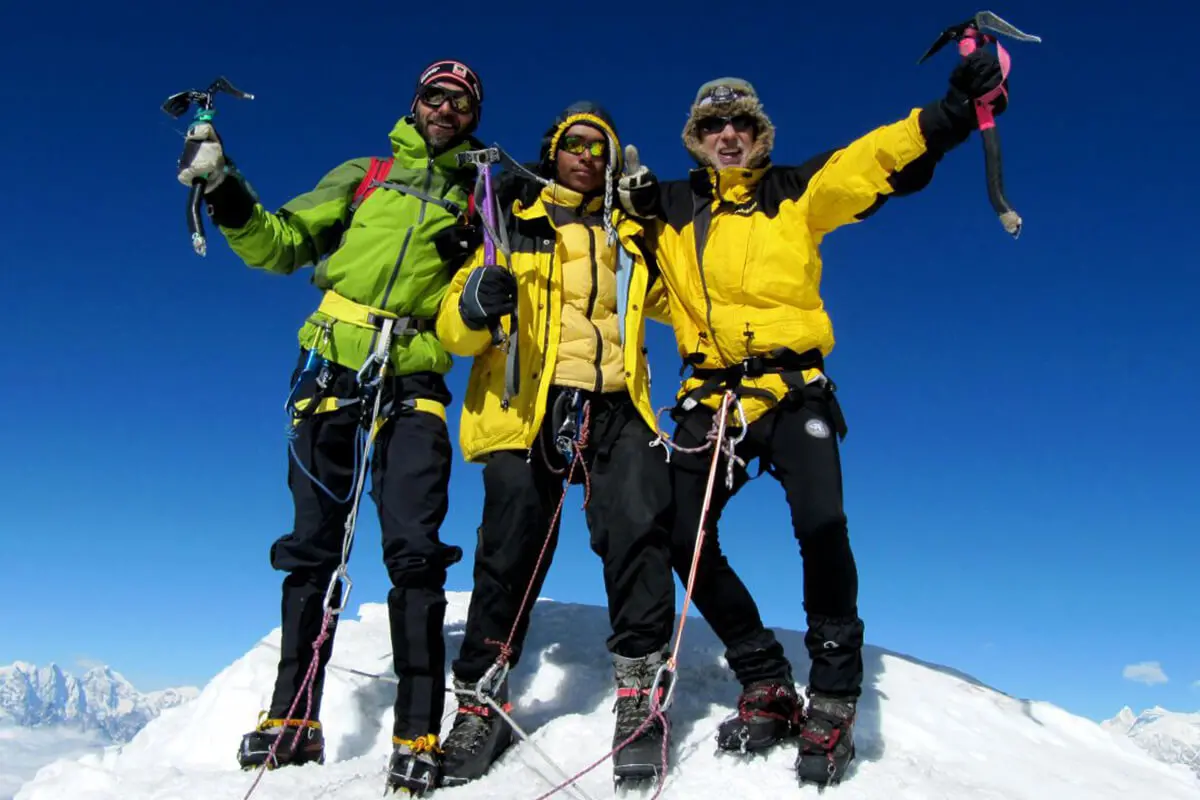
Everest Base Camp with Island Peak Climbing
everest-base-camp-with-island-peak-climbing
Everest Base Camp with Island Peak Climbing

Everest Base Camp with Island Peak Climbing - 16 Days

48 Reviews in TripAdvisor
52 Reviews in Google

Join Trekking Plus for an ambitious 16-day adventure that pairs the legendary trek to Everest Base Camp with the exhilarating climb of Island Peak, locally known as Imja Tse, rising to 6,189 meters. This route is designed for trekkers who want to push past the classic trekking paths and experience true high-altitude mountaineering.

Under the guidance of our certified Sherpa climbing leaders, you will journey through the heart of the Khumbu region, acclimatize along the scenic trails of Namche Bazaar and Pheriche, and stand at the edge of the historic Khumbu Icefall.

Trip Facts
Duration: 18 Days
Trip Grade: Strenuous
Country: Nepal
Maximum Altitude: 6165m/ 20226ft
Starts: Kathmandu
Ends: Kathmandu
Group Size: 1-10
Activities: Climbing
Best Time: Spring (April, May) and Autumn (October, November)

If trekking has started to feel like the warm-up rather than the main event, pairing Everest Base Camp with an Island Peak summit is the natural next step. This 16-day itinerary is built around gradual acclimatization, which matters even more once you're pushing past 6,000 meters.

The trip starts with a flight into Lukla, then follows the Dudh Koshi River up through pine forest to Namche Bazaar. From there, the trail passes Tengboche's monastery and the alpine meadows of Pheriche, giving your body time to adjust before you reach Everest Base Camp (5,364m) and climb Kala Patthar (5,545m) for a clear look at Everest itself. That's where the trek ends and the climb begins.

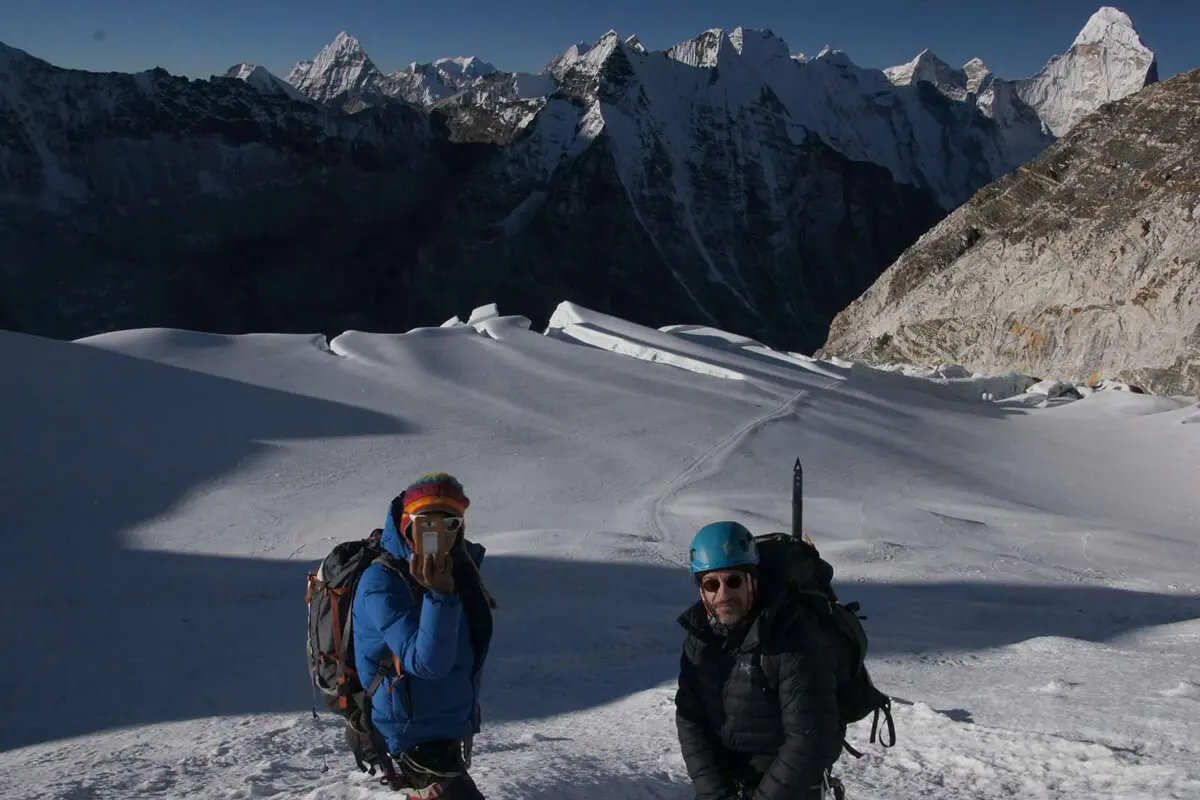
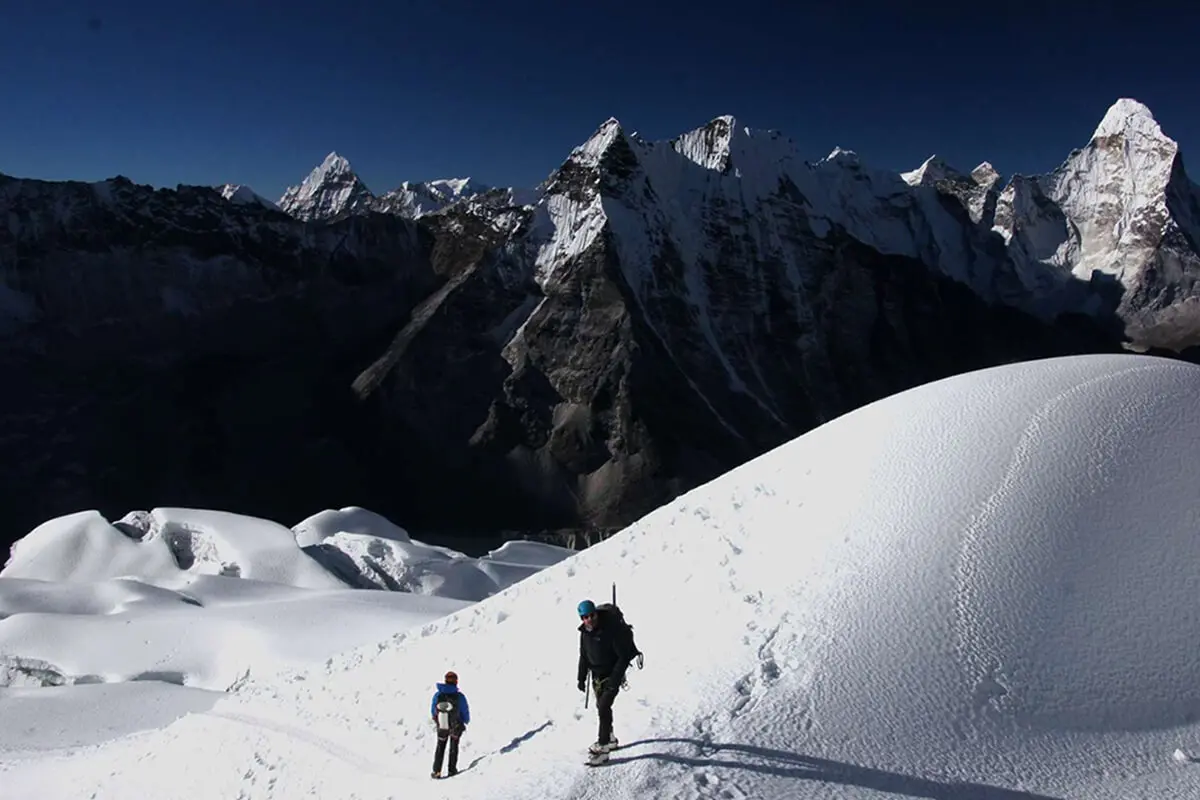
Island Peak sits like its own island in a sea of ice, with Lhotse and Ama Dablam rising around it. The climb doesn't demand advanced mountaineering skills, but it does ask for real fitness and comfort with crampons, harnesses, and jumars.

Trekking Plus provides licensed climbing guides, quality group gear, and hands-on training at base camp before the summit push, and we handle every logistical detail- flights, permits, climbing registration. With our all-inclusive package, you can solely focus on your high-altitude excursion.

Get in touch with our team to start planning your 16-day Everest Base Camp with Island Peak Climbing expedition.

Why Book the Everest Base Camp with Island Peak Climbing?

The Everest Base Camp with Island Peak Climbing is a comprehensive mountaineering journey that combines classic trekking with high-altitude alpine climbing. Ideal for those seeking to step onto a Himalayan summit, here are the key reasons to choose this route:

Gradual Acclimatization for Safety: Spending days above 4,000 and 5,000 meters at Everest Base Camp and Kala Patthar before attempting Island Peak gives your body real time to adjust. That preparation matters a lot when the summit sits at 6,189 meters.

Hands-on Alpine Climbing Experience: Many climbers first use mountaineering gear like crampons, harnesses, ice axes, and fixed ropes on the actual steep headwall of Island Peak. Trekking Plus introduces you to technical mountaineering under the direct guidance of certified climbing Sherpas.

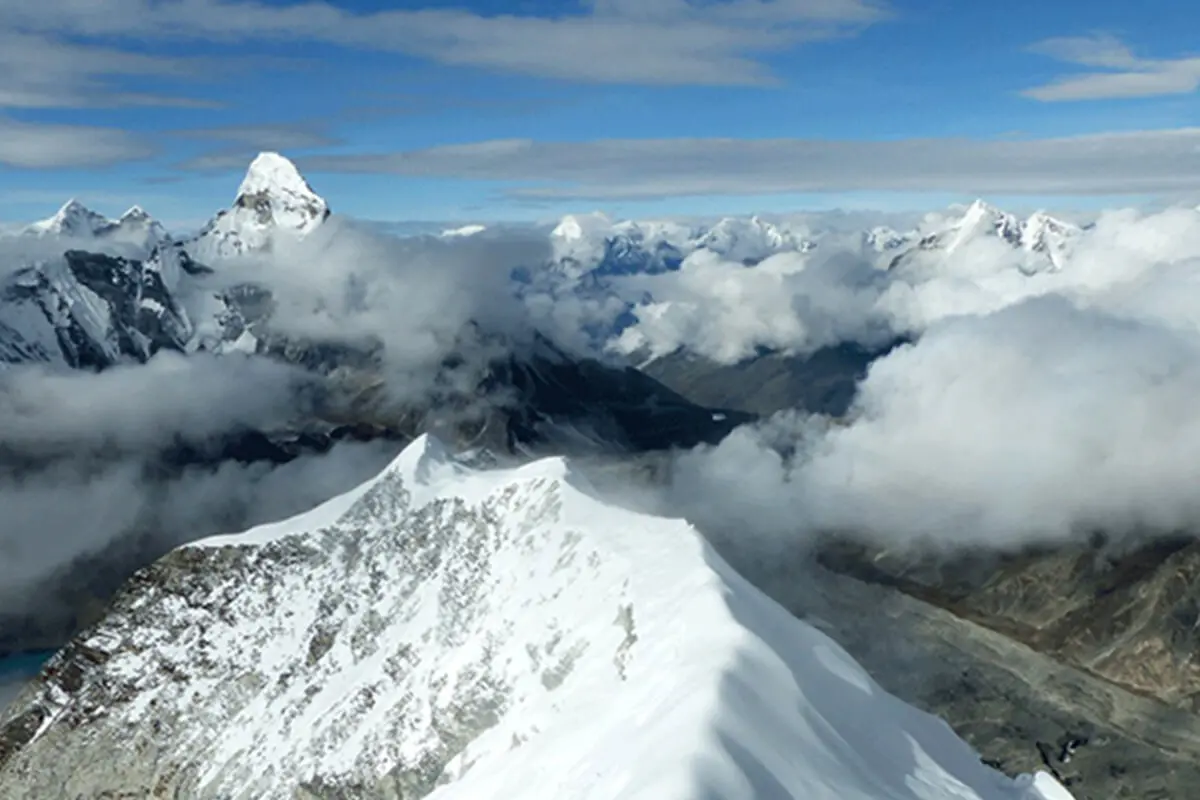
Mountain Panoramas: Standing atop Island Peak puts you right in the middle of the Chhukung valley, surrounded by giant walls of ice. The summit offers a close-up, dramatic view of the south face of Lhotse, the sheer peak of Ama Dablam, and the distant giants Makalu and Baruntse.

Reliable and Comprehensive Logistics Support: Peak climbing in Nepal comes with strict permits and licensing requirements. Trekking Plus handles the paperwork, Sagarmatha National Park permits, Island Peak climbing permits, Lukla flights, and the transport of heavy group gear, so the expedition runs smoothly from the first day to the last.

A Typical Day During the Everest Base Camp and Island Peak Climb in Nepal

A typical day on this expedition begins early, typically around 6:30 AM, to take advantage of the stable mountain weather. After a nutritious breakfast at your teahouse, you pack your daypack with essentials while our porters take charge of your main duffel bags and head out onto the trails by 8:00 AM.

The morning trek usually lasts between 3 and 4 hours. Given the high altitude, the pace is deliberate and steady, emphasizing deep breathing and constant hydration. Your guide will regularly monitor your energy levels and ensure you are pacing yourself appropriately.

You will stop for a hot lunch at a local teahouse along the trail around midday. Dal Bhat, the traditional Nepalese meal of rice, lentil soup, and vegetable curry, is highly recommended as it provides a slow-burning source of energy for the afternoon walk.

The afternoon trekking session is generally shorter. You will reach your teahouse by late afternoon, giving you plenty of time to rest, adjust to the elevation, and warm up in the common dining area. In the evenings, your guide will conduct a briefing regarding the next day's terrain and check your blood oxygen levels using a portable oximeter.

On the actual summit day of Island Peak, this routine shifts to an alpine start, with a wake-up call around midnight to begin climbing by 1:00 AM, ensuring you reach the summit and descend safely before the strong afternoon winds arrive.

Cost of the Everest Base Camp with Island Peak Climbing 2027/2028: Permits, Guides, and Transport

The Everest Base Camp with Island Peak Climbing package requires specialized gear, climbing permits, and guides qualified for alpine terrain. The package covers standard hotel accommodation in Kathmandu, teahouses during the trek, tented camps at Island Peak Base Camp, all trail meals, domestic flights to and from Lukla, and the required conservation and peak permits.

Pricing starts around USD 3,350 for solo climbers, dropping to USD 2,989 per person for group bookings. With Trekking Plus, pricing stays transparent from the start, with nothing hidden once you're on the mountain.

2027/2028 Nepal Everest Base Camp with Island Peak Climbing Highlights

  • Stand at Everest Base Camp at 5,364 meters and witness the sheer scale of the Khumbu Icefall.
  • Scale Kala Patthar at 5,545 meters for unparalleled sunrise views over the summit of Mount Everest, Nuptse, and Lhotse.
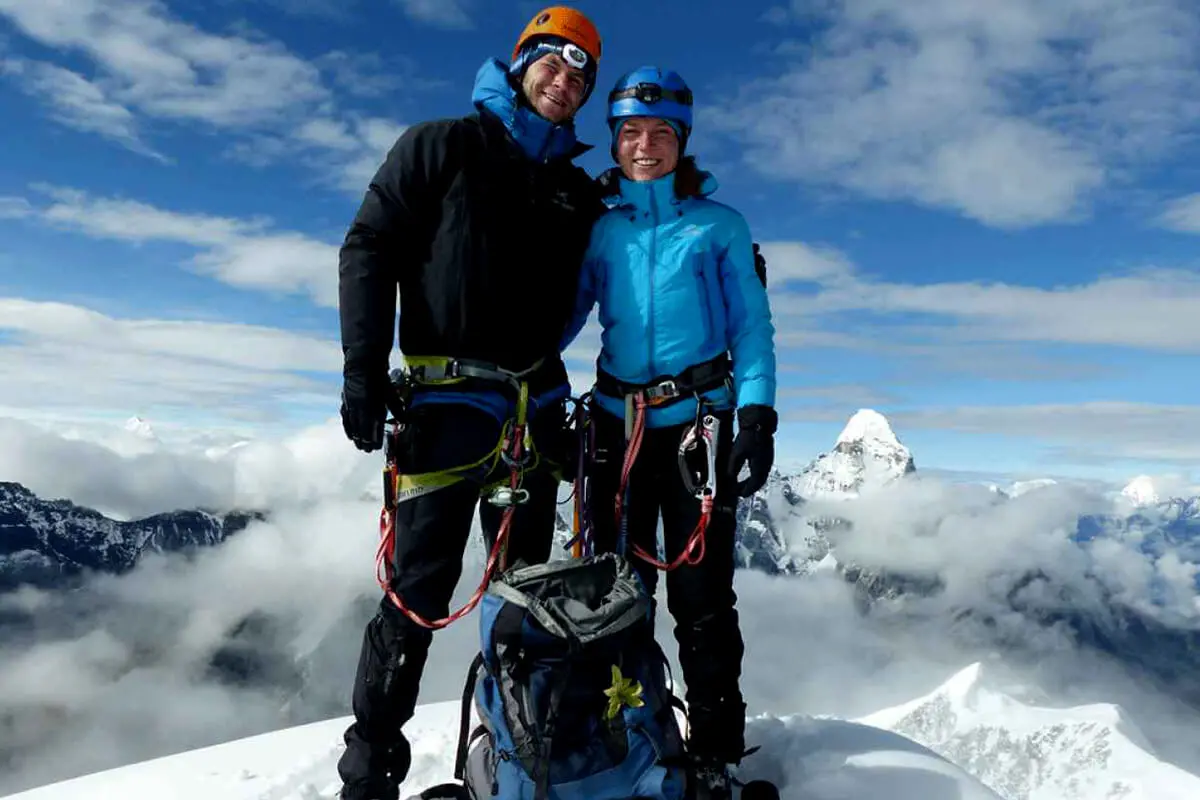
  • Summit Island Peak (Imja Tse) at 6,189 meters, a challenging peak offering a true mountaineering experience.
  • Enjoy a scenic mountain flight to and from Lukla, one of the most famous alpine airstrips in the world.
  • Experience the rich culture and hospitality of the Sherpa people in Namche Bazaar, Tengboche, and Dingboche.
  • Visit the historic Tengboche Monastery, the spiritual heart of the Khumbu region.
  • Take advantage of a carefully structured itinerary with two dedicated acclimatization days in Namche Bazaar and Pheriche.
  • Receive professional climbing training and support from certified high-altitude Sherpa climbing leaders using quality group safety gear.

Customized Everest Base Camp with Island Peak Climbing Nepal 2027/2028

Trekking Plus understands that every climber has distinct experience levels and physical requirements. We can customize the Island Peak expedition to match your climbing background and schedule.

Want more challenge? Add the Cho La Pass or a side trip to the Gokyo Lakes. Looking for more comfort? Upgrade your accommodation in Kathmandu or key stops like Namche Bazaar. Reach out to our team, and we'll build an Everest Base Camp and Island Peak itinerary that matches what you're after.

Itinerary Overview and Route Map

Day 1:Arrival in Kathmandu
Day 2:Fly to Lukla and head to Phakding
Day 3:Trek to Namche Bazaar
Day 4:Acclimatization Day at Namche Bazaar
Day 5:Trek from Namche Bazaar to Tengboche
Day 6:Trek from Tengboche to Pheriche
Day 7:Acclimatization Day at Pheriche
Day 8:Trek from Pheriche to Lobuche
Day 9:Trek to Everest Base Camp via Gorak Shep and return to Gorak Shep
Day 10:Hike to Kala Patthar and Trek down to Dingboche
Day 11:Trek from Dingboche to Island Peak Base Camp
Day 12:Climb to Island Peak Summit and Return to Base Camp
Day 13:Trek from Island Peak Base Camp to Dingboche
Day 14:Trek from Dingboche to Namche Bazaar
Day 15:Trek from Namche Bazaar to Lukla
Day 16:Fly from Lukla to Kathmandu

Everest Base Camp with Island Peak Climbing - 16 Days Detailed Itinerary

Day 1

Arrival in Kathmandu

Your Himalayan adventure begins with your arrival at Tribhuvan International Airport in Kathmandu. A Trekking Plus representative meets you at the arrival terminal and transfers you to your hotel.

The rest of the day is yours to rest, explore the streets of Thamel, or run through any last-minute gear checks before the climb ahead.

Max Altitude: 1,350m (4,429ft)
Meals: None
Duration: Airport transfer
Accommodation: Standard Hotel
Day 2

Fly to Lukla and head to Phakding

An early flight carries you to Lukla. The flight offers spectacular aerial views of the eastern Himalayas along the way. After landing at Tenzing-Hillary Airport, you'll meet your trekking crew and begin the trek, descending gently toward the Dudh Koshi River valley and on to Phakding.

Max Altitude: 2,652m (8,700ft)
Meals: B,L,D
Duration: 35-minute flight and 3-4 hours trek
Accommodation: Mountain Lodge
Day 3

Trek to Namche Bazaar

Today, the trail follows the Dudh Koshi, crossing high suspension bridges strung with prayer flags. After entering Sagarmatha National Park at Monjo, you'll descend toward the river before a steep, steady ascent of Namche Hill, giving you your first clear views of Everest and Lhotse.

A 5-6 hour trek brings you to Namche Bazaar, the central trading hub of the Khumbu.

Max Altitude: 3,440m (11,286ft)
Meals: B,L,D
Duration: 5-6 hours trek
Accommodation: Mountain Lodge
Day 4

Acclimatization Day at Namche Bazaar

To ensure a safe Himalayan journey, we have included acclimatization days. Rather than staying back at your hotel, we recommend active recovery today. This active rest day helps your body adjust to the altitude.

You will take a morning hike to the Everest View Hotel, offering a panoramic view of Everest, Lhotse, and Ama Dablam. In the afternoon, you can wander the local markets, bakeries, and Sherpa cultural museums around town.

Max Altitude: 3,440m (11,286ft)
Meals: B,L,D
Duration: 2-3 hours hike (optional)
Accommodation: Mountain Lodge
Day 5

Trek from Namche Bazaar to Tengboche

You will ascend out of Namche Bazaar on a scenic trail offering views of Ama Dablam. The path then drops into the deep forest at Phunki Thenga before beginning a steady climb through rhododendron and pine trees to Tengboche.

Here, you will visit the famous Tengboche Monastery, the largest Buddhist monastery in the region, set against a backdrop of Himalayan giants.

Max Altitude: 3,870m (12,696ft)
Meals: B,L,D
Duration: 5-6 hours
Accommodation: Mountain Lodge
Day 6

Trek from Tengboche to Pheriche

Today, you begin the trek descending through forested trails and across the Imja Khola. You will climb back past stone mani walls to reach Pangboche. As the tree line fades, the landscape opens into windswept alpine pasture, bringing you to your overnight destination in Pheriche.

Max Altitude: 4,371m (14,340ft)
Meals: B,L,D
Duration: 5-6 hours
Accommodation: Mountain Lodge
Day 7

Acclimatization Day at Pheriche

This second acclimatization day is crucial for your physical preparation. To follow the “climb high, sleep low” strategy, you will take a short hike up the ridge above Pheriche. Take in the views of the Dingboche valley with Ama Dablam, Cholatse, and Taboche in the background.

Max Altitude: 4,371m (14,340ft)
Meals: B,L,D
Duration: 2-3 hours
Accommodation: Mountain Lodge
Day 8

Trek from Pheriche to Lobuche

The trail climbs steadily through a wide valley toward Thukla, then faces a steep push up Thukla Pass, home to a memorial for climbers and Sherpas lost on Everest. Beyond the pass, the trail levels out along the Khumbu Glacier's moraine, leading to the high outpost of Lobuche.

Max Altitude: 4,940m (16,207ft)
Meals: B,L,D
Duration: 5-6 hours
Accommodation: Mountain Lodge
Day 9

Trek to Everest Base Camp via Gorak Shep and return to Gorak Shep

Your journey today crosses the rocky moraine to Gorak Shep, the highest permanent settlement in the region. After a short rest and lunch, you'll continue along the Khumbu Glacier toward Everest Base Camp itself. From the foot of the world’s largest peak, take in the expansive view of Khumbu Icefall and the atmosphere of this famous spot before retracing your steps to Gorak Shep for the night.

Max Altitude: 5,364m (17,598ft)
Meals: B,L,D
Duration: 7-8 hours
Accommodation: Mountain Lodge
Day 10

Hike to Kala Patthar and Trek down to Dingboche

A pre-dawn climb to Kala Patthar rewards you with one of the Himalayas' best panoramas, as sunrise lights up Everest, Nuptse, and Lhotse. After breakfast back at Gorak Shep, you'll descend past Lobuche and Thukla, taking a different route down into the wide, agricultural valley of Dingboche.

Max Altitude: 5,545m (18,192ft)
Meals: B,L,D
Duration: 6-7 hours
Accommodation: Mountain Lodge
Day 11

Trek from Dingboche to Island Peak Base Camp

Leaving the standard Everest trail behind, you'll head east through the Chhukung valley toward Island Peak, climbing steadily over glacial moraine and sandy lakebeds. At base camp, you'll settle into your tent before a safety briefing and gear check with your climbing guide to prepare for the technical climb ahead.

Max Altitude: 5,200m (17,060ft)
Meals: B,L,D
Duration: : 5-6 hours
Accommodation: Tented Camp
Day 12

Climb to Island Peak Summit and Return to Base Camp

Your summit attempt starts with an alpine start around midnight. You will navigate the steep, rocky ground to the crampon point before gearing up to cross the glacier.

With the help of professional climbing Sherpa guides, you will use the fixed ropes and ascenders up the snow and ice headwall to the narrow summit ridge, where Lhotse, Makalu, and Ama Dablam spread out before you at 6,189 meters.

After spending some time at the summit a careful descent back to base camp follows.

Max Altitude: 6,189m (20,305ft)
Meals: B,L,D
Duration: 10-12 hours
Accommodation: Tented Camp
Day 13

Trek from Island Peak Base Camp to Dingboche

You will pack up your camp and begin your descent back down the valley. The trail leads you past the high-altitude pastures of Chhukung, dropping back into the warmer, more oxygen-rich air of Dingboche.

You will spend the evening relaxing in the comfort of a local mountain lodge, celebrating your successful climb with your crew.

Max Altitude: 4,360m (14,304ft)
Meals: B,L,D
Duration: 4-5 hours
Accommodation: Mountain Lodge
Day 14

Trek from Dingboche to Namche Bazaar

The trail retraces its path down the Khumbu Valley through Pangboche and Tengboche, dropping steeply to the river before climbing back up through pine forest to Namche Bazaar.

Back in this mountain town, you are rewarded with a hot shower, reliable internet, and the local bakeries.

Max Altitude: 3,440m (11,286ft)
Meals: B,L,D
Duration: 6-7 hours
Accommodation: Mountain Lodge
Day 15

Trek from Namche Bazaar to Lukla

On your final trekking day, you will make the long descent from Namche Bazaar down to the Dudh Koshi River valley. You cross familiar suspension bridges through Phakding before a final uphill stretch into Lukla.

In the evening, you will join your guides and porters for a farewell dinner, thanking them for their support throughout the climb.

Max Altitude: 2,800m (9,186ft)
Meals: B,L,D
Duration: 6-7 hours
Accommodation: Mountain Lodge
Day 16

Fly from Lukla to Kathmandu

An early flight back to Kathmandu gives you one last aerial look at the Everest region. After checking into your hotel, the rest of the day is free for rest or souvenir shopping in Thamel, followed by a farewell dinner with the Trekking Plus team.

Max Altitude: 1,350m (4,429ft)
Meals: Breakfast, Farewell Dinner
Duration: 35-minute flight
Accommodation: Standard Hotel
Are you still confuse from where to start? Trekking Plus has solutions for this.

Cost Details

Includes

  • Airport pickup service on arrival.
  • Round-trip domestic flight tickets between Kathmandu and Lukla, inclusive of all airport taxes.
  • Two nights of standard hotel accommodation with breakfast in Kathmandu on a twin-sharing basis.
  • Standard teahouse accommodation on a twin-sharing basis during the trekking portion.
  • High-quality, shared tented camp accommodation at Island Peak Base Camp.
  • Three nutritious meals a day (Breakfast, Lunch, and Dinner) along with seasonal fresh fruits and tea or coffee during the trek and climb.
  • An experienced, licensed, English-speaking trekking guide and a certified, professional high-altitude Sherpa climbing leader.
  • Porter support during the trek (1 porter for every 2 trekkers) to carry up to 25 kg of luggage.
  • All staff expenses, including salaries, insurance, meals, accommodation, and flights for the guides, climbing leaders, and porters.
  • Group climbing equipment, including high-quality ropes, ice screws, snow bars, harnesses, carabiners, and descenders.
  • Sagarmatha National Park entry permit, Island Peak climbing permit, local area fees, and all government taxes and VAT.
  • Complimentary Trekking Plus duffel bag, T-shirt, trekking map, and down jacket or sleeping bag rental to be returned after the trip.
  • Comprehensive medical kit with a portable oximeter to monitor altitude safety.
  • Celebratory farewell dinner in Kathmandu on the final night.

Excludes

  • International airfare and Nepal entry visa.
  • Lunches and dinners in Kathmandu.
  • Personal climbing and trekking gear, such as climbing boots, crampons, ice axes, and personal clothing.
  • Travel and emergency rescue insurance, which is compulsory and must cover high-altitude helicopter evacuation.
  • Personal expenses on the trail, including hot showers, battery charging, Wi-Fi, and bottled beverages.
  • Tips for the guide, climbing leader, and porters.
  • Any other expenses not specifically mentioned in the inclusions section.

Equipment List for Everest Base Camp with Island Peak Climbing - 16 Days

What to Pack for the 16-Day Everest Base Camp with Island Peak Climbing?

The temperature range on this trip is extreme, shifting from warm, humid lower valleys to freezing, sub-zero conditions at Island Peak Base Camp and the summit. Having the correct personal gear is vital for your safety and comfort.

Here is a list of recommended gear and clothing for your expedition:

Head and Face Protection

  • Warm wool or fleece hat that covers your ears
  • Sun hat or baseball cap for lower altitudes
  • UV-protection sunglasses (Category 3 or 4 to prevent snow blindness)
  • High-SPF sunscreen and protective lip balm
  • Lightweight neck gaiter or fleece buff

Body Clothing

  • Moisture-wicking synthetic base layers (3 pairs)
  • Middle-layer fleece jackets or warm sweaters (2 pairs)
  • Waterproof and windproof shell jacket
  • High-altitude down jacket (provided by Trekking Plus)
  • Lightweight, quick-dry trekking shirts (3-4 pairs)
  • Convertible trekking pants and heavy-duty trekking trousers
  • Thermal underwear for cold nights and summit day

Lower Body and Footwear

  • Sturdy, waterproof trekking boots (well broken-in)
  • Double climbing boots compatible with crampons (which can be rented in Chhukung or Kathmandu to save luggage weight)
  • Camp shoes or sandals for evening use in the teahouses
  • Thick, moisture-wicking wool hiking socks (4-5 pairs)
  • Warm wool summit socks (2 pairs)
  • Gaiters to keep snow out of your boots

Hand Protection

  • Lightweight liner gloves
  • Insulated, windproof trekking gloves
  • Heavyweight climbing mitts for summit day

Essential Trekking and Climbing Gear

  • Daypack (30-40 liters) to carry your daily layers, water, and camera
  • Duffel bag (provided by Trekking Plus) for your main luggage carried by porters
  • Four-season sleeping bag (rated to -20°C or colder)
  • Adjustable trekking poles
  • Headlamp with plenty of spare lithium batteries (standard alkaline batteries lose charge quickly in the sub-zero cold)
  • Personal climbing harness, crampons, ice axe, ascender (jumar), and safety carabiners (group climbing gear is provided, but bringing personal, fitted items is often preferred)
  • Reusable, insulated water bottles or Nalgene flasks (hydration bladders are discouraged on summit day as the tubes freeze quickly)
  • Personal toiletries, biodegradable wet wipes, and a basic personal medical kit
  • Nepalese Rupees in cash for personal trail expenses (such as device charging, snacks, and showers)

Essential Information

When is the Best Time for the Everest Base Camp with Island Peak Climbing 2027/2028?

Timing matters more for a summit attempt than almost anywhere else on this trip. Spring, April to May, and autumn, October to November, are the two real climbing windows in the Khumbu.

Spring brings warmer temperatures at high camp and longer daylight, which makes the midnight summit push a bit more forgiving. Lower trails fill with blooming rhododendrons too, though afternoon clouds show up more often this time of year.

Autumn is the more reliable choice overall, with stable weather, crisp mornings, and the clearest skies of the year, which translates directly into better summit views. It runs colder, especially during the alpine start, but the dry conditions make the glacier crossing and headwall climb noticeably safer.

Winter and summer are both avoided, between the extreme cold and heavy snow of one and the monsoon rain that disrupts Lukla flights in the other.

How Difficult is the Everest Base Camp with Island Peak Climbing?

This expedition is graded as strenuous and challenging. It is a major step up from a standard high-altitude trek because it combines a multi-day walk to 5,364 meters with an alpine peak climb to 6,189 meters.

The trekking portion alone demands a lot, including consecutive days of sustained walking in thin air. But the real test starts past Dingboche.

Climbing Island Peak means navigating over loose rock, crossing a glaciated field in crampons, and ascending a steep, 100-meter snow headwall on fixed ropes with a jumar.

Who can go on the Everest Base Camp with Island Peak Climbing?

This challenging expedition is designed for:

  • Experienced trekkers looking to make the transition into high-altitude alpine climbing.
  • Active outdoor enthusiasts with excellent physical endurance, strong legs, and a solid cardiovascular base.
  • Adventure seekers who want to experience the legendary trails of the Khumbu alongside a true mountaineering summit.
  • Climbers looking to test their gear and physical limits before attempting larger peaks like Mera Peak or Lobuche.