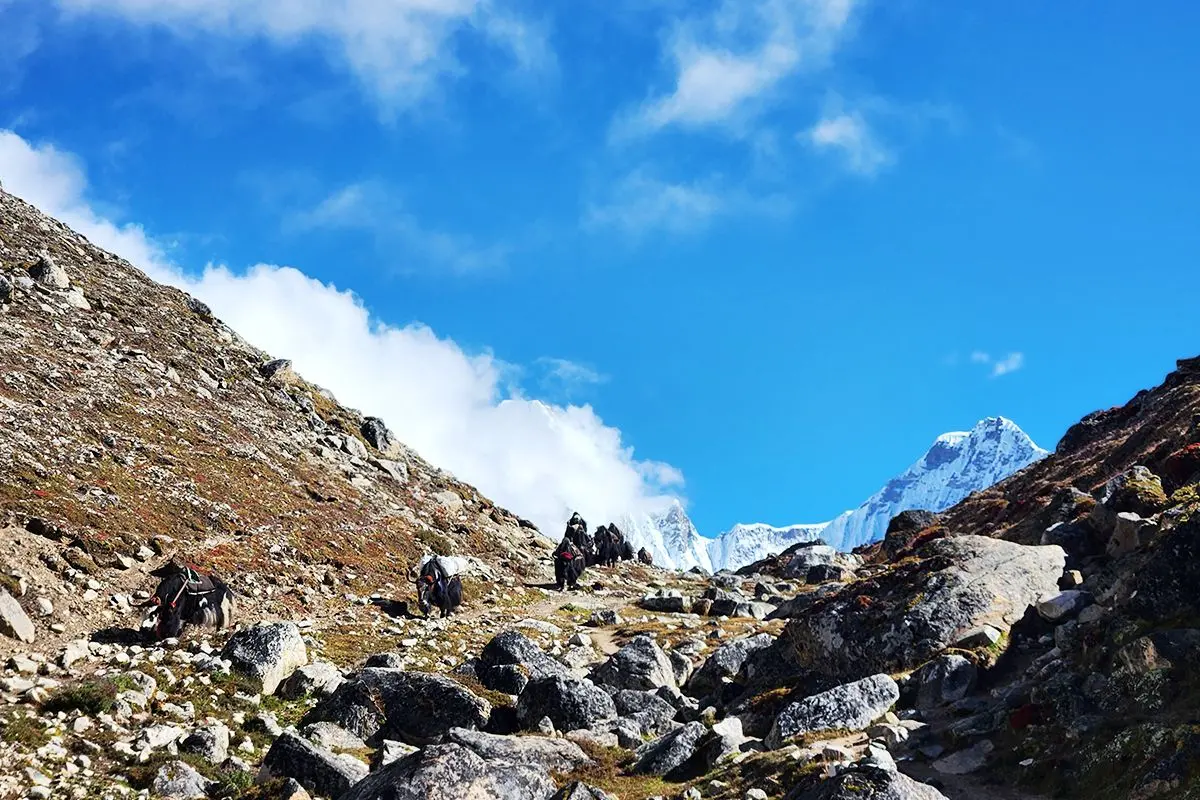
Lobuche Everest
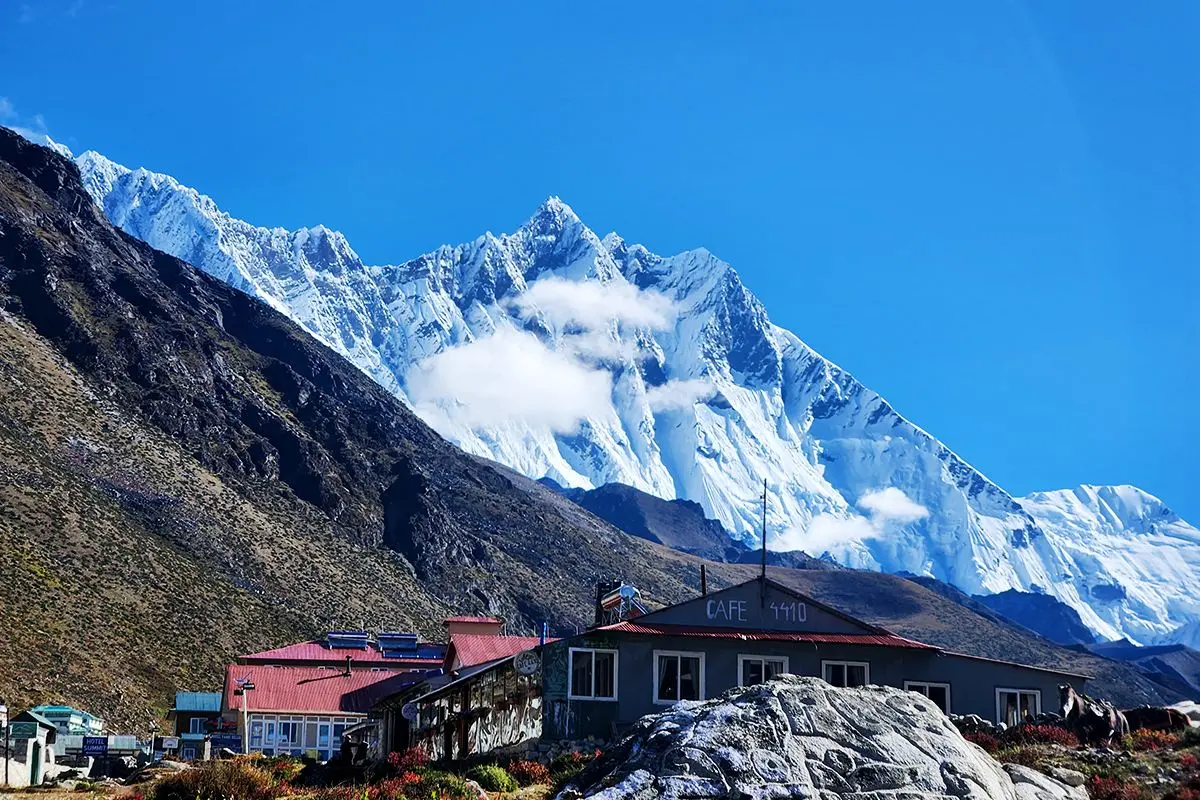
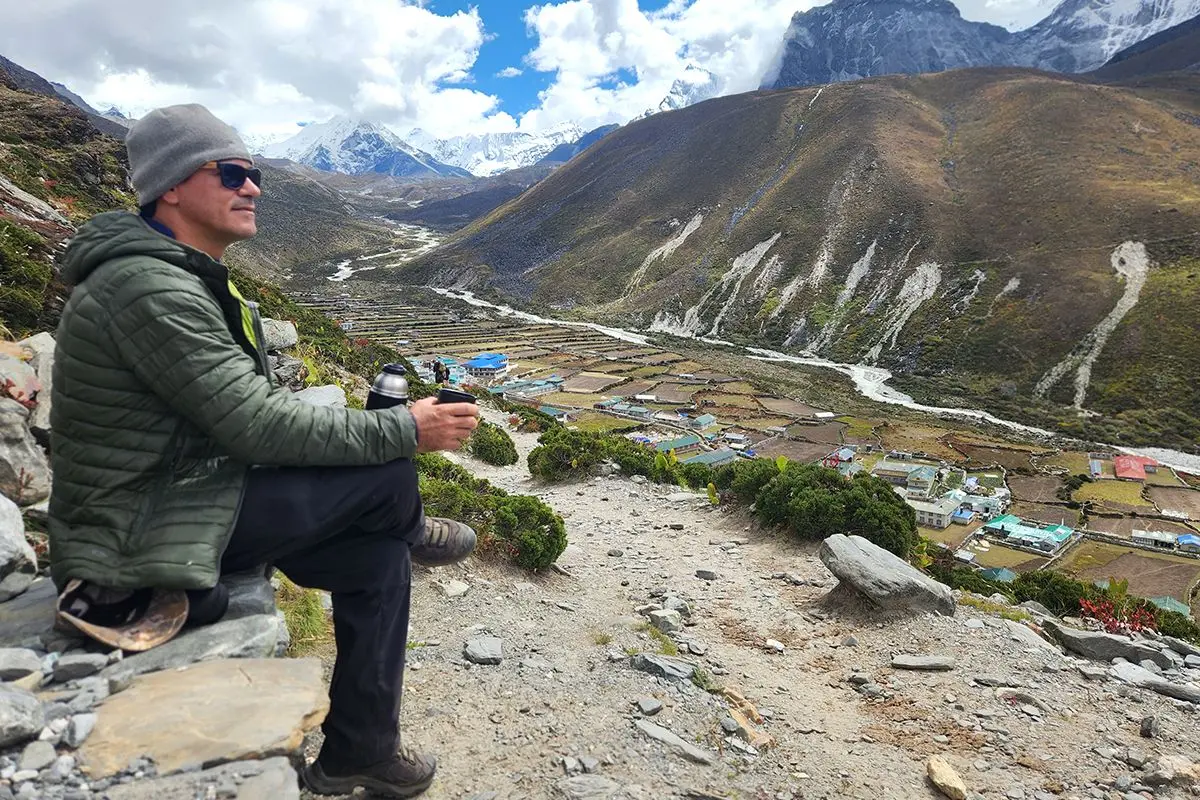
dingbouche village everest
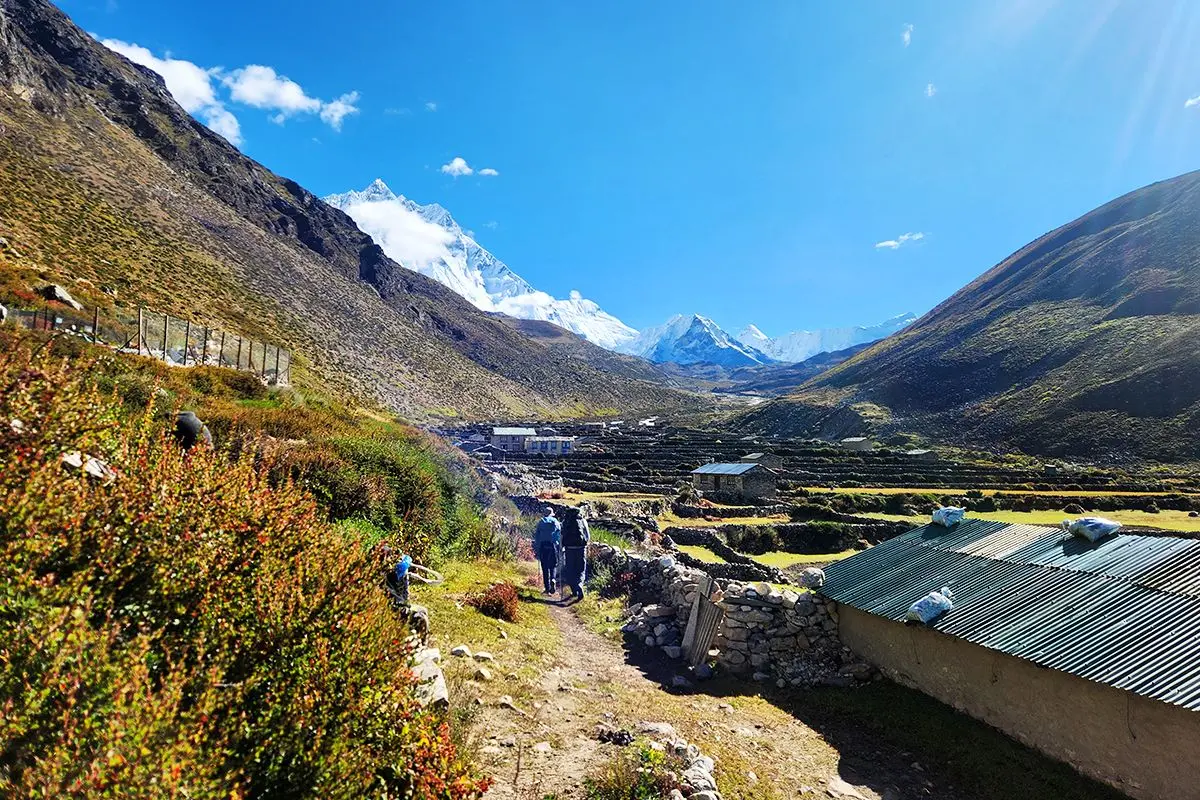
chukung village
Everest three passes trekking
Everest high passes

Everest Three Passes Trek -20 Days

48 Reviews in TripAdvisor
52 Reviews in Google

Everest Three High Passes Trek is one of the most challenging and rewarding treks in the Everest region. It takes trekkers across three high passes—Renjo La (5,388m / 17,513ft), Cho La (5,380m / 17,650ft), and Kongma La (5,535m / 18,159ft) that are not part of the standard Everest Base Camp trail, offering an unparalleled opportunity to explore the Khumbu region at its best. This trek combines adventure, breathtaking views, and cultural experiences, making it ideal for experienced trekkers seeking a unique Himalayan journey.

Trip Facts
Duration: 16 Days
Trip Grade: Strenuous
Country: Nepal
Maximum Altitude: 5,555 m/ 18,225 ft
Starts: Kathmandu
Ends: Kathmandu
Group Size: 1-12
Activities: Trekking
Best Time: Mar-May, Sep-Nov

Everest High Passes or Three Passes Trek is one of the classic trekking in Everest Region allowing the trekker to reach Everest Base Camp and the combined adventure of three high passes, Kongma La, Cho La and Renjo La is inspiring. Everest High Passes Trek is only for experienced trekkers looking for an adventure like no other in Khumbu region. Everest High Passes Trek is actually a circuit trek connecting all the major trekking routes in Khumbu region. Everest high passes trek is the best option among all treks offered in the Everest region. Everest High Passes Trek is the ultimate option to experience the snowy ups and downs of the Himalayas. 

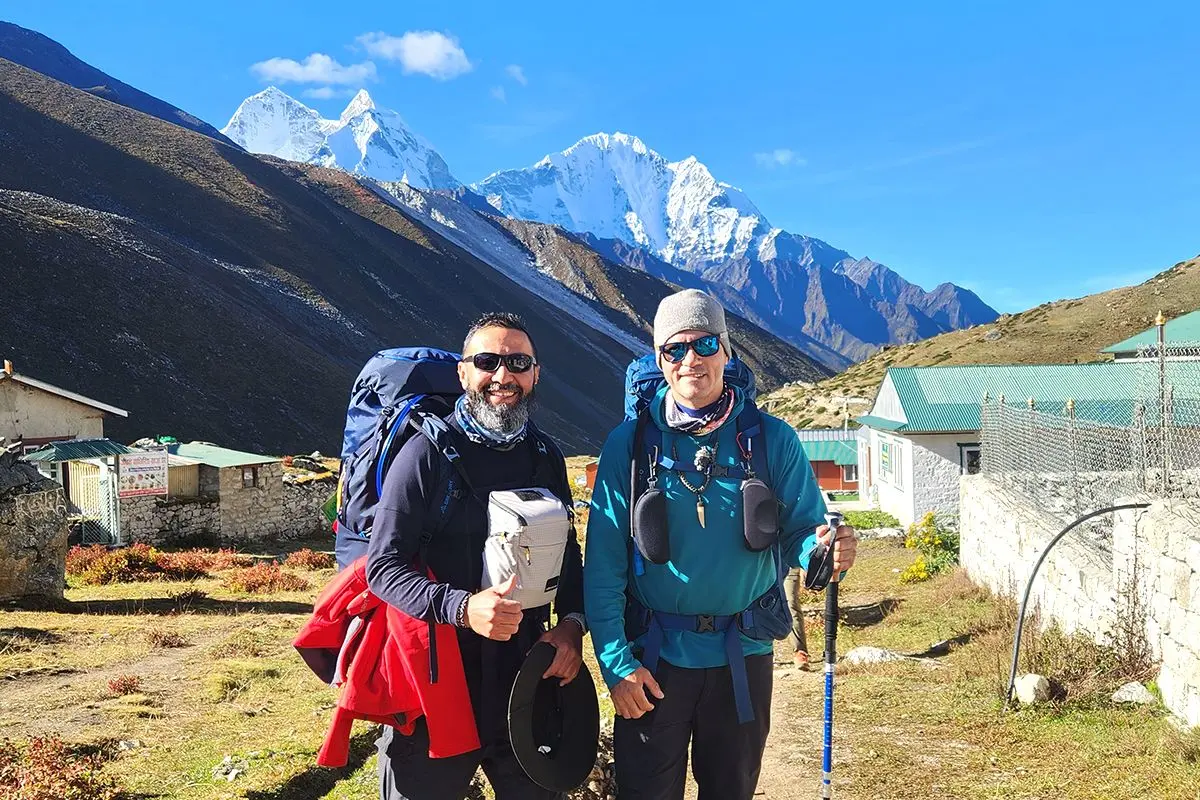
It crosses through high-altitude alpine forests, providing rare encounters of Himalayan flora and fauna. The hospitality offered by the inhabitants of the region, Sherpa, is commendable. Catching a glimpse of few of the Eight-thousanders located in the region, namely; Mt. Everest, Cho Oyu, Lhotse, Maklau, Nuptse, Pumori, and Amadablam, can be overwhelming. 20 days of continuous trekking up the mountain can be very challenging and exhausting. One can have spare days en route to ensure plenty of time to acclimatize, moreover, the assistance provided by the guides and Sherpa will make your trip more comfortable. They are trained in treating minor sicknesses on the trek as well as the high passes trek tends to be more challenging and longer than the average Everest Base Camp Trek.

The trek does not require any climbing experience, therefore, one with minimal trekking experience can choose this trek. Come and join this ultimate adventure of spectacular views, centuries old Buddhist monasteries plus culturally rich and friendly Sherpa people are some of the many pleasant surprises in store. Thee high passes are Renjo La (5,388m/17,513ft), Cho La (5,380m/17,650ft) and Kongma La (5,535m/18,159), and also offering the opportunity to explore the Everest region at its best as well as for those trekkers who are a bit experienced and daring to challenge the giant Himalayas of Everest region.

Everest Three High Passes Trek is for those who seek for more wild and challenging holidays experience as it is more demanding and the longer route crossing through three high passes in everest region. You will also climb three hikng peaks; Gokyo Ri (5,360m) and Kala Pattar (5,54m) offer superb views of Everest, whilst Chukkung Ri (5,550m) is a lesser-known summit, tucked under the imposing Lhotse-Nuptse wall and more beautiful and heavenly sight.

Everest Three High Passes Trek starts with an exciting mountain flight to the Tenzing Hillary Airport at Lukla – a beautiful mountain town. We begin our hiking from here to Phakding on the first day and second day we trek to Namche Bazaar, the Sherpa capital. We have a rest and acclimation day at Namche as it is vital to get acclimatized ourselves to adapt with high altitude. On the rest day we have option to hike to Khunde and Khumjung – a charming twin Sherpa Villages. We follow by the regular Everest Base Camp Trek route walking through the places of Tengboche; where we will visit region´s most active monastery, enjoy colorful landscapes, other Buddhist monasteries, prayers walls, manis and Dingboche in the land enclosed by the soaring peaks. At Dingboche, trail breaks off with main trail and we head up to Chhukung (beautiful hamlet of Sherpa Village ). We climb Chhuking Ri on the acclimation day at Chhukung and overnight in Chhukung, also it is always recommended that "hike higher and sleep lower" helps you acclimatized. Then our first three passes, the Kongma La, is probably the toughest day, but your reward is stunning views of Makalu (8,485, the world´s fifth highest mountain) to the east. It is a leisurely descent to Labuche, where we rejoin classic Everest Base Camp Route, before climbing the famous view point of Kala Patthar, second of our three peaks.

Kongma la is the highest pass of Everest Three Passes Trek being at an altitude of 5528m. It gives the unbelievable panoramic view of the mountains. It is generally less crowded and less visited by people and is the most challenging of all. Kongma la pass takes all the way to Chhukung village giving the most stunning and detailed views of several mountains. The stimulating paths and wonderful views make the pass more daring and exciting.

Difficulties of Everest Three Pass Trek

It is a physically challenging task to ascend Chola requiring crampons for the slippery path. Kongma La pass is at an altitude of 5,535 m (18,160 ft) located between Chukhung and Lobuche village. While returning from base camp trekkers can attempt Kongma La. Among three passes (Renjo La, Cho La, and Kongma La) Kongma La is the highest pass. Renjo La pass is located in Khumbu Valley at an altitude of 5,360 m (17,585 ft). Renjo La is in the eastern front of Lungden leaving Gokyo to the west. The path to it is very difficult and passing it during winter is very hard to deal with.

What can trekkers expect on the Everest Three High passes Trek ? 

This adventurous trek is a truly exceptional Himalayan adventure, offering trekkers the rare opportunity to explore the Everest region beyond the usual crowded trails. Traversing the legendary high passes of Renjo La (5,388m / 17,513ft), Cho La (5,380m / 17,650ft), and Kongma La (5,535m / 18,159ft), this trek challenges even seasoned adventurers while rewarding them with awe-inspiring panoramas of Mount Everest, Lhotse, Cho Oyu, Makalu, Ama Dablam, and other towering peaks of the Khumbu region.

Unlike the bustling standard Everest Base Camp route, this trek follows quieter trails, allowing trekkers to immerse themselves fully in the pristine Himalayan wilderness. Along the way, you will encounter stunning glacial lakes, high-altitude alpine forests, and centuries-old Buddhist monasteries, experiencing both natural beauty and cultural richness. Friendly Sherpas guide you throughout, offering local knowledge, assistance, and a warm welcome that makes every step memorable.

The trek combines challenge with comfort: trekkers navigate rugged mountain passes and ascend iconic peaks such as Gokyo Ri, Chhukung Ri, and Kala Pattar, witnessing sunrise and sunset over snow-capped summits. Despite the high altitudes and physically demanding terrain, the trek does not require technical climbing skills, making it accessible to trekkers with good fitness and some previous trekking experience. Proper acclimatization days ensure safety and allow trekkers to enjoy the journey at a steady pace.It is perfect for those seeking a challenging yet deeply rewarding adventure that goes beyond the ordinary Everest trek, leaving you with unforgettable memories of the world’s highest peaks and pristine mountain landscapes.

Itinerary Overview and Route Map

Day 1:Arrive in Kathmandu (1400m. / 4593ft.)
Day 2:Free day in Kathmandu (1400m./ 4593ft.)
Day 3:Fly from Kathmandu/Manthali to Lukla and trek to Phakding (2610m./ 8562ft.)
Day 4:Trek from Phakding to Namche Bazaar (3440m./ 11286ft.)
Day 5:Acclimatization Day (3440m./ 11286ft.)
Day 6:Trek from Namche Bazaar to Tengboche (3860m./ 12664ft.)
Day 7:Trek from Tengboche to Dingboche (4410m./ 14468ft.)
Day 8:Trek from Dingboche to Chukung (4730m. / 15518ft.)
Day 9:Acclimatization Day(4730m. / 15518ft.)
Day 10:Trek from Chukung to Lobuche (4910m./ 16108ft.), crossing over Kongma La pass 5535m
Day 11:Trek from Lobuche to Gorakshep (5140m. / 16863ft.). Day trip to Everest Base camp (5364m./ 17598ft.)
Day 12:Hike to Kalapathar ( 5545m) in the morning and trek to Dzongla (4830m./ 15846ft.)
Day 13:Trek from Dzongla to Gokyo (4790m. / 15715ft.), crossing over Chola pass(5420m./17782ft.)
Day 14:Acclimatization: Gokyo-Ri ( 5357 m ) & Gokyo Village (4790m./ 15715ft.)
Day 15:Trek from Gokyo to Marulung (4210m./ 13812ft.) Via Renjo La Pass (5360m./ 17585ft.)
Day 16:Trek from Marulung to Namche Bazaar (3440m./ 11286ft.) via Thame
Day 17:Trek from Namche to Lukla (2840m./ 9317ft.)
Day 18:Flight from Lukla to Manthali/Kathmandu (1400m./ 4593ft.)
Day 19:Free day Kathmandu (1400m./ 4593ft.)
Day 20:Final Departure

Everest Three Passes Trek -20 Days Detailed Itinerary

Day 1

Arrive in Kathmandu (1400m. / 4593ft.)

Trekking Plus representative will be holding your printed your name card at arrival waiting spot. You will be escorted to hotel by private vehicle and our representative will help you to check-in your hotel. Evening we will take your to local market exploration and cultural dinner. Overnight in Kathmandu,

Max Altitude: 1,400m (4,593ft)
Meals: Welcome dinner
Mode of Transportation: Private transport
Day 2

Free day in Kathmandu (1400m./ 4593ft.)

Today, we will check your equipment required for the treks and suggest you buy/ rent at the evening time while we are doing team talk at the office. You have an option to add on day sightseeing tour to some of cultural heritages of Kathmandu. Kathmandu valley consists of three monuments with are recognized by UNESCO. A professional city guide will recite the stories behind these destinations ( it costs extra )

Max Altitude: 1,400m (4,593ft)
Day 3

Fly from Kathmandu/Manthali to Lukla and trek to Phakding (2610m./ 8562ft.)

We take the incredibly picturesque flight early in the morning from Kathmandu to Lukla (2827m), for 40 minutes, or we drive to Manthali airport to catch up our flight to Lukla ( It takes about 5 to 6 hours and a 20 minutes flight to Lukla, and then trek to Phakding (2,610 m) – 3 to 4 hours. After taking off, our Sherpa crews carry our trekking equipment. In the afternoon, we start our walk by moving downwards to the Dudh Kosi River and catch the main trail to Namche Bazaar, located just above Chaunrikharka (2713m). On the way to Phakding, we will see the stone walls, prayer wheels, painted mani stones, etc. You can view the mesmerizing view of Kusum Kanguru (6367m. / 20889ft.) from Thado Koshi gaon, where we will have our lunch. We will walk for a while from there to get to Phakding.The walking is unproblematic, and after passing through the small village of Ghat(2550m) it is a short walk to Phakding.

Max Altitude: 2,610m (8,562ft)
Meals: B,L,D
Duration: 5-6 hrs drive, 20 min flight
Distance: 7
Accommodation: Mountain Lodge
Day 4

Trek from Phakding to Namche Bazaar (3440m./ 11286ft.)

From Phakding we cross the river and ascent the valley. The track is nearer to the river valley and is in a series with attractive blue pine and rhododendron forest that is very fabulous when flowers blossom in the spring months. After crossing the Dudh Kosi River at Benkar we can glimpse on enticing snow-capped peaks of Kusum Kanguru (6369m) and Thamserku (6623m). From here it is only a short walk to Monjo (2835m),. In the hours of daylight the walking is a little problematic and includes the vertical inclination to Namche Bazaar. From Monjo it is a short march to the doorway of the national park, prior to crossing the Dudh Kosi River to Jorsale (2805m). The trek goes on upstream on generally flat terrain, crossing back to the right bank to the meeting point of the Bhote Kosi and Dudh Kosi Rivers. After passing a large and stable suspension bridge far above the river, we gradually mount at a steady pace. There are some incredible picturesque prospects as the peaks of Everest, Lhotse, Nuptse and Tabuche (6542m) are visible.
 

Max Altitude: 3,440m (11,286ft)
Meals: B,L,D
Duration: 5-6 hrs
Distance: 14
Accommodation: Mountain Lodge
Day 5

Acclimatization Day (3440m./ 11286ft.)

Namche Bazaar is a trading village with a bank, ATM, internet cafes, and souvenir shops. We have options for spending the day, whether hiking to Khumjung Gompa, the Everest View Hotel, or Khunde village, Sherpa settlements. From the Everest View Hotel, the dazzling panorama includes splendid scenery of Mt. Everest(8848.86m. / 29031ft.), Khumbi Yul Lha(5761m./ 18900ft.), Ama Dablam(6812m. / 22349ft.), and many more. From the national park headquarters above the village, one can take the opportunity to witness both the sunrise and sunset views. There is also a mountaineering display and information on the park’s flora and fauna. Overnight stay at Namche Bazaar.

Max Altitude: 3,440m (11,286ft)
Meals: B,L,D
Duration: 4-5 hrs
Accommodation: Mountain Lodge
Day 6

Trek from Namche Bazaar to Tengboche (3860m./ 12664ft.)

From Namche Bazaar, we walk towards the park headquarters and go on up to high above the Dudh Kosi River. Higher than Namche the path to Thyangboche turns out to be visible with the monastery located below the summit of Everest and encircled by other Himalayan peaks. Also, one can spot local flora and fauna including the beautiful Danfe pheasant, often seen among the birch and silver fir forest between Shanasa and Trashinga, and Himalayan tahr, on the high ground above the trail. After arriving at the reforestation nursery at Trashinga, the track slopes down steeply until we come across the Dudh Kosi River at Phunkitenga (3250m). After lunch, in the afternoon we go up, initially steeply, through pine, fir, black juniper and rhododendron forests towards Thyangboche. The monastery and our lodge are sited in a fine-looking grazing land surrounded by immense Himalayan peaks in a beyond doubt serene and tranquil environment. The most prominent peaks seen from here are Kantega, Ama Dablam and, for sure, Mt. Everest.

Max Altitude: 3,860m (12,664ft)
Meals: B,L,D
Duration: 5-6 hrs
Distance: 12
Accommodation: Mountain Lodge
Day 7

Trek from Tengboche to Dingboche (4410m./ 14468ft.)

After breakfast, we start our trek from Tengbouvhe to Dingbouche. The track goes gradually go up high above the Imja Khola and get further on of the tea houses at Orsho before crossing the river and old glacial moraines on our track to our hotel in the community of Dingboche. The landscape is impressive while Everest here is hidden behind the Lhotse-Nuptse ridge; the giant peaks that rise above the eastern ending of the valley. We will cross several suspension bridges over Imja Khola. Overnight at Dingboche.

Max Altitude: 4,410m (14,468ft)
Meals: B,L,D
Duration: 5-6 hrs
Distance: 12
Accommodation: Mountain Lodge
Day 8

Trek from Dingboche to Chukung (4730m. / 15518ft.)

Indeed, Dingboche is a striking assortment of small fields surrounded by stone walls shielding the crops of barley and potatoes from the chilly winds. It is occupied mainly through the monsoon months, when big numbers of yaks are made to graze in the valley meadow. At the back of the lodge, the enormous rock looks of Tabuche look as if we are moving towards the heaven. Chukkung is another sensible option. The sights are unbelievable in this valley; the soaring south face of Lhotse to the north, Island Peak in the core of the valley and the fluted ice walls of nameless peaks is lined up in the southern end of the valley.

Max Altitude: 4,730m (15,518ft)
Meals: B,L,D
Duration: 3-4
Distance: 6
Accommodation: Mountain Lodge
Day 9

Acclimatization Day(4730m. / 15518ft.)

Our body needs to acclimate to the changing altitudes. Today we will hike up to Chukung Ri (5550m./18208ft.). Chukung Ri offers a stunning view of Lhotse, Makalu and Baruntse. From Chhukung Ri (5,550 m), you glimpse the entire Imja Valley and the glacier-fed lake Imja Tsho. The Himalaya stretch endlessly 8,000-meter peaks in conversation with the sky. Afternoon in teahouse warmth. Your guide explains how weather systems shift from Bay of Bengal to Tibetan Plateau why monsoons paint rhododendrons red in April and glaciers shimmer blue in October. Overnight stay at Chukung

Max Altitude: 4,730m (15,518ft)
Meals: B,L,D
Duration: 2-3 hrs
Accommodation: Mountain Lodge
Day 10

Trek from Chukung to Lobuche (4910m./ 16108ft.), crossing over Kongma La pass 5535m

Today we start early in the morning after having a light breakfst because we have the first high pass out of 3 passes in everest. There are two ways to reach our destination, Lobuche. We can either take the path over a hill which is to the northwest of Chhukung over Nuptse glacier moraines or, we can walk back to Bibre and trek on the path above Niyang Khola. The pass is covered by cairns and Buddhist prayer flag. The final slant from this pass is the most difficult part in our entire trek. After ascending the moraine, the trial turns north by Khumbu Glacier which takes our trial to Lobuche. Stay overnight at Lobuche.

Max Altitude: 5,535m (18,159ft)
Meals: B,L,D
Duration: 7-8 hrs
Distance: 15
Accommodation: Mountain Lodge
Day 11

Trek from Lobuche to Gorakshep (5140m. / 16863ft.). Day trip to Everest Base camp (5364m./ 17598ft.)

After breakfast at Lobuche, we walk through the Everest Base Camp (5364m./ 17598ft.) trail to reach Gorakshep. From Lobuche we trek to the broad valley that is parallel to Khumbu Glacier. A steady way up permits us to build the slow, steady pace necessary when walking at high height. When we arrive at the moraines of Changri Nup Glacier, we make a sequence of small up and down walking over a unsteady track lined with cairns that shows the way ultimately to the unexpected glacial sands of Gorak Shep (5160m). The way to Everest Base Camp is through the moraines and rocky path. Today is a challenging day, but it's worth reaching the base camp of the world's highest mountain. After having lunch at Gorakshep, we head toward Everest Base Camp. After spending some time at base camp, we will return to Gorakshep. 

Max Altitude: 5,364m (17,598ft)
Meals: B,L,D
Duration: 7-8
Distance: 12
Accommodation: Mountain Lodge
Day 12

Hike to Kalapathar ( 5545m) in the morning and trek to Dzongla (4830m./ 15846ft.)

We hike to Kala Patar (5545m) early in the morning to observe awe-inspiring crack of dawn views from this amazing vantage point. From the hotel the way up is pretty steep, so start very leisurely and try to go up at a slower speed. Kala Patar is the rocky peak below Pumori. It is a hard-hitting walk because of the elevation, but the observation from the top is beyond our imagination. We set off for Lobuche, where we stop for lunch after returning back to lodge and have our breakfast. We then, tag along the Lobuche Khola downstream where, after a while, we take a path to the right heading off towards Dzongla.
 

Max Altitude: 5,545m (18,192ft)
Meals: B,L,D
Duration: 6-7 hrs
Distance: 12
Accommodation: Mountain Lodge
Day 13

Trek from Dzongla to Gokyo (4790m. / 15715ft.), crossing over Chola pass(5420m./17782ft.)

From Dzongla, we will have to begin walking early in the morning after having light breakfast. From camp we go up promptly on a narrow path passing large rock chunks and on the left we can see the main glacier. Once we pass the track of snowfield, the situation becomes easy, we soon get to the top of the pass (5420m), where the views are amazing and include Baruntse (7220m) and Ama Dablam, as well as a sea of lesser peaks. As there are fissures which seem to be dangerous, we do not stroll around the snowfield. The decline from the pass is vertical and care should be taken as we follow the graceful rocky path down to the Nymagawa Valley. After few hours of walk we reach Thangnak and have lunch there and after lunch we cross rocky chunks and reach Gokyo Lake. It takes another 45 minutes to reach the settlement of Gokyo where we spend the night.
 

Max Altitude: 5,420m (17,782ft)
Meals: B,L,D
Duration: 7-8
Distance: 17
Accommodation: Mountain Lodge
Day 14

Acclimatization: Gokyo-Ri ( 5357 m ) & Gokyo Village (4790m./ 15715ft.)

After crossing the two high passes, our body is exhausting, so we will stay in Gokyo for one more day. Those who desire for the morning views at Gokyo RI will have to wake up early for an ascent of Gokyo Peak (5360m), whereas others can have a belated breakfast and maybe take an optional walk up the Gokyo Valley to enjoy extra glorious scenery. Gokyo RI is the highest mountain in Khumbu region of the Nepal Himalayas located on the west side of the Ngozumpa glacier (largest in Nepal and in the whole Himalayas). From the very point, we can have the mesmerizing view of four 8000 m peaks i.e. Mt. Everest, Mt. Lhotse, Mt.Makalu, and Mt. Cho Oyu; and also the view of small village with stone houses blows the mind of visitors. After having this magnificent panoramic view of Himalayas, we trek back to Gokyo Lake and stay overnight there. 

Max Altitude: 5,357m (17,575ft)
Meals: B,L,D
Duration: 3-4
Accommodation: Mountain Lodge
Day 15

Trek from Gokyo to Marulung (4210m./ 13812ft.) Via Renjo La Pass (5360m./ 17585ft.)

As we have a long day to walk today we have an early beginning. The path goes round to the north of Gokyo Lake and then goes up. Turning to our backside, we can view exceptional views of Gokyo and the mountains in the background. We keep on moving and also see boulder hop towards Renjo Pass (5420m). We now, reach the peak of the pass, which is noticeable by prayer flags, from where we can have a look into Nangpa Valleyand and on our backside we have views of Everest and Makalu. From the Renjo La Pass, one can view Everest and Rolwaling Himalayan range, Makalu, etc. We will descend slowly through the rocky, slippery pathway. Overnight at Marulung.

Max Altitude: 5,360m (17,585ft)
Meals: B,L,D
Duration: 7-8 hrs
Distance: 17
Accommodation: Mountain Lodge
Day 16

Trek from Marulung to Namche Bazaar (3440m./ 11286ft.) via Thame

After breakfast, we trek down to Namche Bazaar. We will reach Namche Bazaar by crossing several suspension bridges and passing through the juniper forests and Sherpa villages like Taranga, Thame, Phurte, and Gongla. Overnight at Namche Bazaar.

Max Altitude: 3,445m (11,302ft)
Meals: B,L,D
Duration: 6-7
Distance: 15
Accommodation: Mountain Lodge
Day 17

Trek from Namche to Lukla (2840m./ 9317ft.)

After breakfast, we trek back to lukla through the Jorsalle, Monjo, Phakding passing by several mani walls and chortens, we will reach Lukla. This is the last day of trekking, where we make the final climb up to the airstrip at Lukla. Stay overning in Lukla
 

Max Altitude: 2,840m (9,317ft)
Meals: B,L,D
Duration: 6-7 hrs
Distance: 16
Accommodation: Mountain Lodge
Day 18

Flight from Lukla to Manthali/Kathmandu (1400m./ 4593ft.)

After having last breakfast in the mountain, we will take a morning flight to Kathmandu, leaving behind the mountains and taking the memories of days on the trek.You will enjoy a farewell dinner with the staff members of Trekking Plus.

Max Altitude: 1,400m (4,593ft)
Meals: B, D
Duration: 45 m flight
Day 19

Free day Kathmandu (1400m./ 4593ft.)

It's a reserve day. In case, we cannot get back to Kathmandu due to flight cancellations, weather reasons, etc. If we are back in Kathmandu, it is a free day to rest or stroll around the streets of Kathmandu Valley.

Day 20

Final Departure

We will drop you in the airport by our private vehicle according to your airport time. Nepal airport often has hassles for travelers so it is good if you reach airport at least two hours prior to departure.
 

Are you still confuse from where to start? Trekking Plus has solutions for this.

Cost Details

Includes

  • Airport transfers for arrival and departure, including assistance with local flight schedules
  • Local guesthouse accommodation during the trek on a twin-sharing basis (shared bathroom outside)
  • Hygienic local meals (Breakfast, Lunch, and Dinner) with one cup of tea or coffee
  • An experienced, English-speaking, government-licensed trekking guide
  • Porter service (one porter for every two trekkers to carry personal belongings). (Note: No porter is provided for solo trekkers)
  • Salary, food, equipment, and insurance for the guide and porter (insurance as per state regulations)
  • All necessary permits (National Park permits and local entry permits)
  • Flight tickets Kathmandu–Lukla or Manthali–Lukla, and Lukla–Kathmandu or Manthali (If you prefer a helicopter from Kathmandu to Lukla, we can arrange it on a shared basis for an extra USD 350 per person each way)
  • Farewell dinner at a Nepali restaurant
  • Trekking map, duffle bag for the porter (if needed), water purification tablets, and a first aid kit with basic medicines
  • All government taxes and Trekking Plus service charges
  • Farewell dinner before your final departure

Excludes

  • Personal trekking equipment
  • All accommodation, meals, and sightseeing in Kathmandu
  • (We can arrange these on request.)
  • International flights and Nepal visa fees
  • Travel insurance
  • (Must cover trip cancellation, accidents, health issues, emergency evacuation, loss of life, theft, or damage to personal belongings.)
  • Tips and gratuities
  • (It is customary for trekking staff to receive tips for good service.)
  • Costs due to unforeseen events beyond the control of Trekking Plus
  • Emergency rescue or evacuation, including helicopter rescue and personal accident insurance
  • Extra porter service or baggage weight above 15 kg (for both trekking and flights)
  • Personal expenses during the trek: snacks, alcoholic and non-alcoholic drinks, bottled water, hot showers, Wi-Fi, battery charging, etc.
  • Any other services not mentioned in the Cost Includes section

Dates & Availablity

Our trekking groups are small, with a maximum of 14 people, allowing for a comfortable and more personal experience. We welcome solo travelers, friends, and families, creating a friendly and connected group atmosphere. Please select a date from the calendar to join a group departure. If you prefer a private trek, share your preferred dates with us, and we will arrange everything with our skilled and reliable local guide.

Essential Information

Everest Three Passes Trek Difficulty

The Everest Three Passes Trek is one of the most challenging treks in the Himalayas. It is suitable for trekkers who enjoy a serious adventure. The trek is not easy because the trails are steep, rocky, and physically demanding. You will cross three high passes, each over 5,000 meters, which is extremely challenging. Your body and mind must both be strong enough for long walking days. On most days, you will walk for six to seven hours, and on days when you cross the passes, the walking time may extend to eight or even nine hours. To complete this trek safely and comfortably, you must prepare well. Previous trekking experience is highly recommended, and you should take at least four to six weeks for physical training before the trek.

Altitude Sickness

Adjusting to high altitude is very important on this trek. If your body acclimatizes properly from the beginning, the risk of altitude sickness becomes much lower. As you move above the tree line, you need to be more careful. Our carefully planned itinerary includes enough rest days to help you acclimatize. Walking slowly, eating nutritious food, and drinking plenty of water will help your body adapt. If anyone in the group feels symptoms of altitude sickness, they should inform the team immediately. Our trek leader will provide first aid and take further steps as needed. In the worst situation, we can arrange an emergency helicopter evacuation to a hospital in Kathmandu. Staying well hydrated is essential, as sometimes water works like medicine at high altitudes.

Everest Three Passes Trek Route

The Three Passes Trek takes you deep into the Khumbu region. There are two ways to complete this trek, but we follow the anti-clockwise route because it helps with easier altitude gain. The journey begins with a scenic flight from Kathmandu to Lukla. From Lukla, the trail moves through Phakding, Namche Bazaar, Tengboche, and up to Dingboche, passing rhododendron forests, beautiful landscapes, and traditional Sherpa villages. From Dingboche, the trail heads to Chhukung, where you cross the first pass, Kongma La, and descend to Lobuche. Over the next two days, you visit Everest Base Camp and hike to the famous viewpoint of Kala Patthar. The trail then climbs over Cho La Pass from Dzongla and enters the stunning Gokyo Valley. After exploring the Gokyo Lakes and hiking to Gokyo Ri, you cross the final pass, Renjo La, and descend to Marlung and Thame. The route then reconnects with Namche Bazaar before returning to Lukla to end the trek.

Last-Minute Booking for the Three Passes Trek
To book the Everest Three Passes Trek, you need to pay ten percent of the total trip cost. You can book directly through our website. If you prefer a custom itinerary, our trekking experts are ready to assist you. We recommend reading our terms and conditions before booking. For last-minute bookings, even within 48 hours, we will check availability and inform you as soon as possible. For quick bookings or inquiries, contact us at +977 9801169212 or +977 9851169212 on WhatsApp or Viber.

Permits Required for the Trek

To enter the Everest region and complete the Three Passes Trek, you need two permits: the Sagarmatha National Park Entry Permit and the Khumbu Pasang Lhamu Rural Municipality Permit. These can be obtained either in Kathmandu or at the checkpoint in Jorsalle. Both permits cost NPR 3,000 per person. Our trekking package includes all permit fees, and we will arrange everything on your behalf.

Best Time for the Three Passes Trek

The best time to trek the three high passes is during spring (March to April) and autumn (October to November). These seasons offer stable weather, clear mountain views, and beautiful scenery. Rhododendrons bloom in spring, and the climate remains moderate, with temperatures ranging from 18°C during the day to around 5°C at night. During these months, many trekkers from around the world visit Nepal, making the trails lively and enjoyable.

Accommodation during the Everest Three Passes Trek

Throughout the trek, you will stay in mountain lodges. Lodges in lower villages usually offer hot showers, Wi-Fi, and device charging for a small fee. Rooms are simple, twin-shared, and usually come with shared bathrooms. Although the rooms are basic, they are warm and comfortable after a long day of trekking. The dining areas are often cozy and a great place to relax. Carrying a sleeping bag is recommended for extra warmth.

Food on the Trek

Three meals a day are provided during the trek. The menus in the Everest region are well developed, and some lodges even serve dishes like pizza and biryani. However, the most reliable and nutritious meal is Nepali dal bhat, which is freshly cooked and rich in carbohydrates. It provides the energy you need for long walking days.

Travel Insurance

Travel insurance is mandatory for the Everest Three Passes Trek. Your insurance must cover emergency helicopter evacuation up to 5,500 meters and medical expenses. Because the trek is strenuous and involves higher risks, proper insurance is essential for safety.

Important Travel Tips

Electricity is available throughout the trek, but there may be occasional shortages, especially during bad weather. Many lodges use solar power, and charging your devices usually requires a small fee. Internet is available through paid Wi-Fi services, and carrying a Nepali SIM card can be helpful, though mobile network coverage may be weak in remote areas. The last ATM is in Namche Bazaar, so carrying enough Nepali currency is important. The luggage limit is ten kilograms for your duffel bag and five kilograms for your daypack. Tips for guides and porters are not included in the package and should be planned separately. Finally, do not trek in brand-new boots, as they may cause blisters. Well-broken-in trekking shoes are much more comfortable.