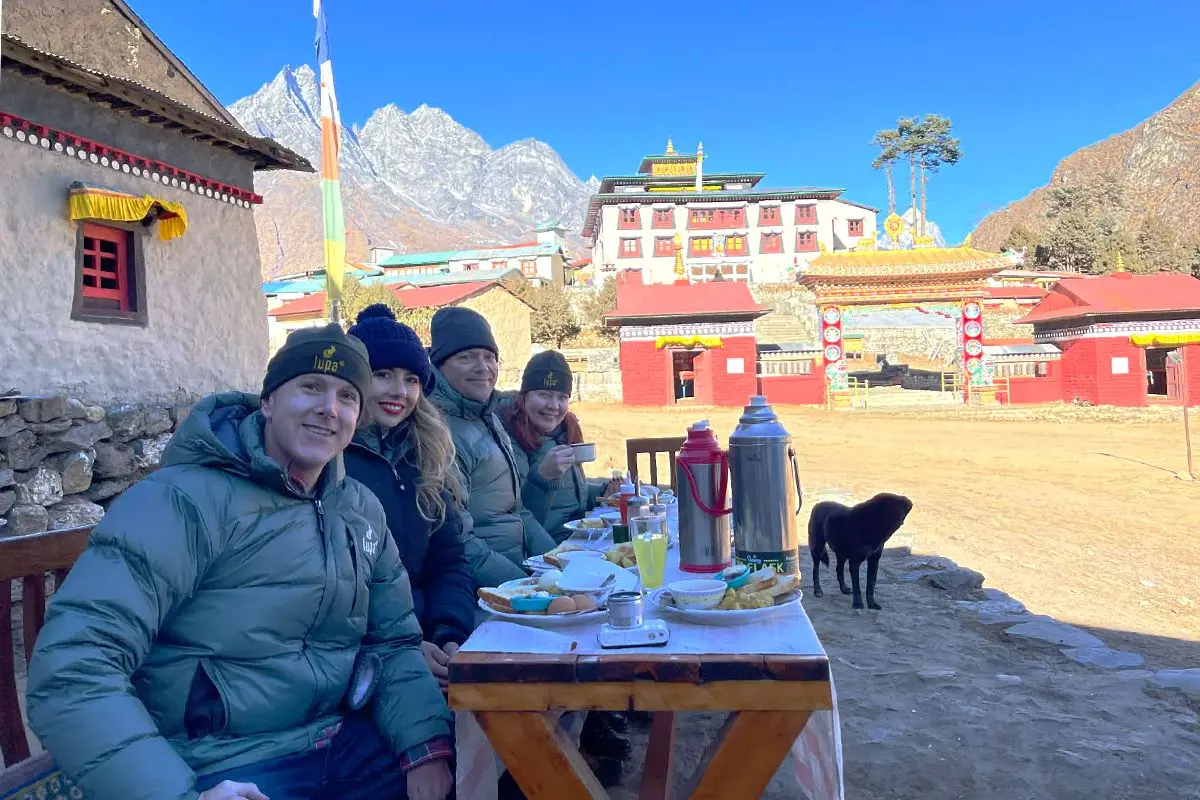
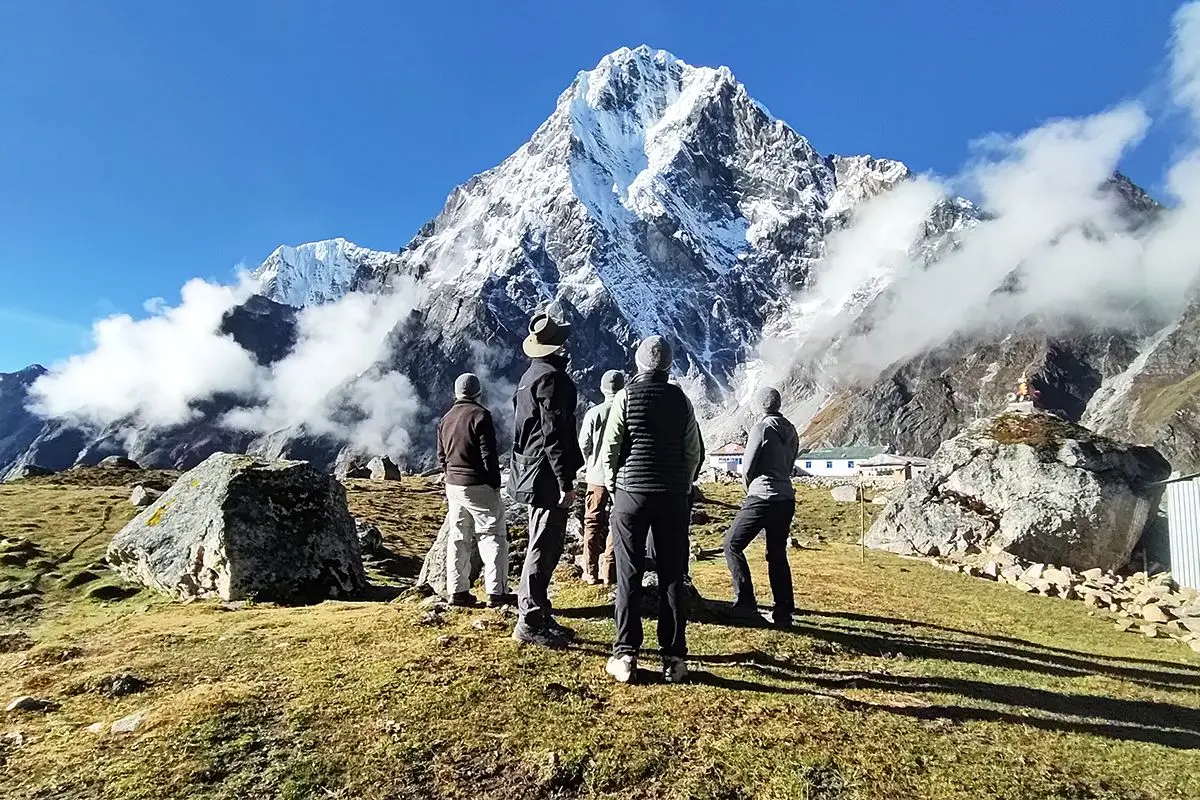
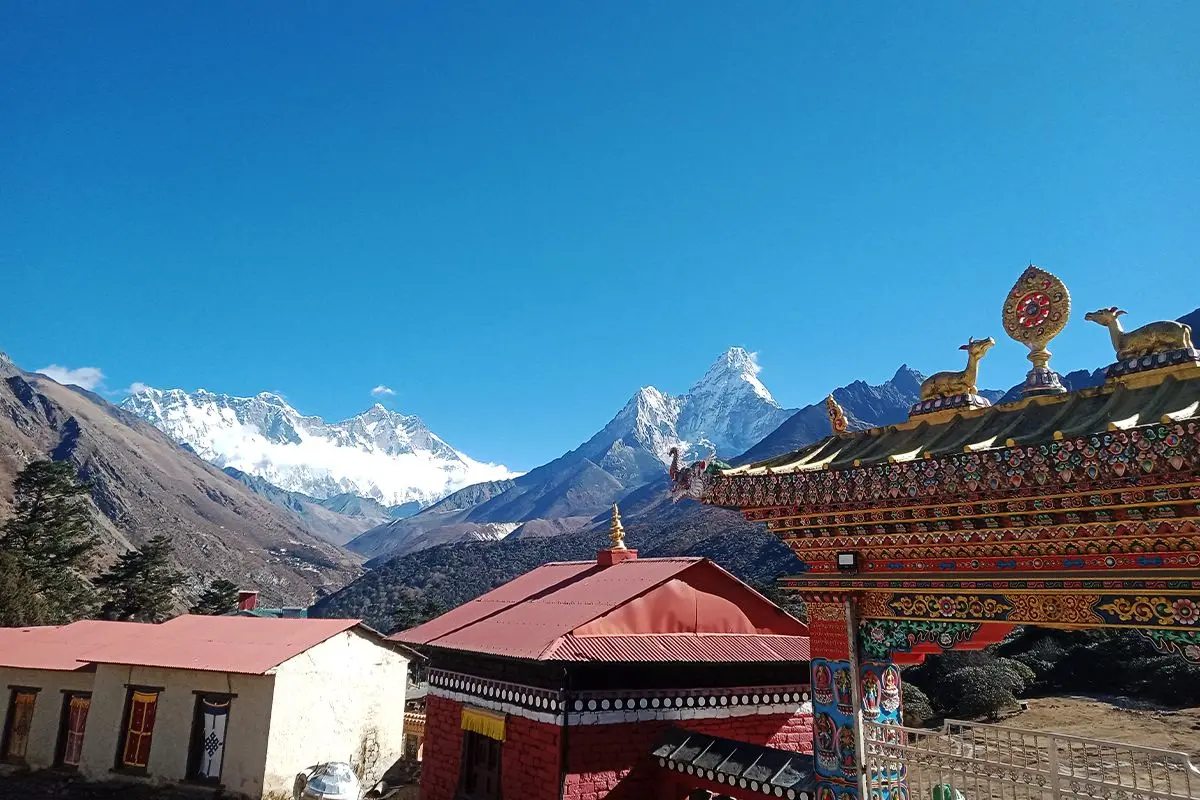
Breakfast in mountain
Everest Luxury Trek
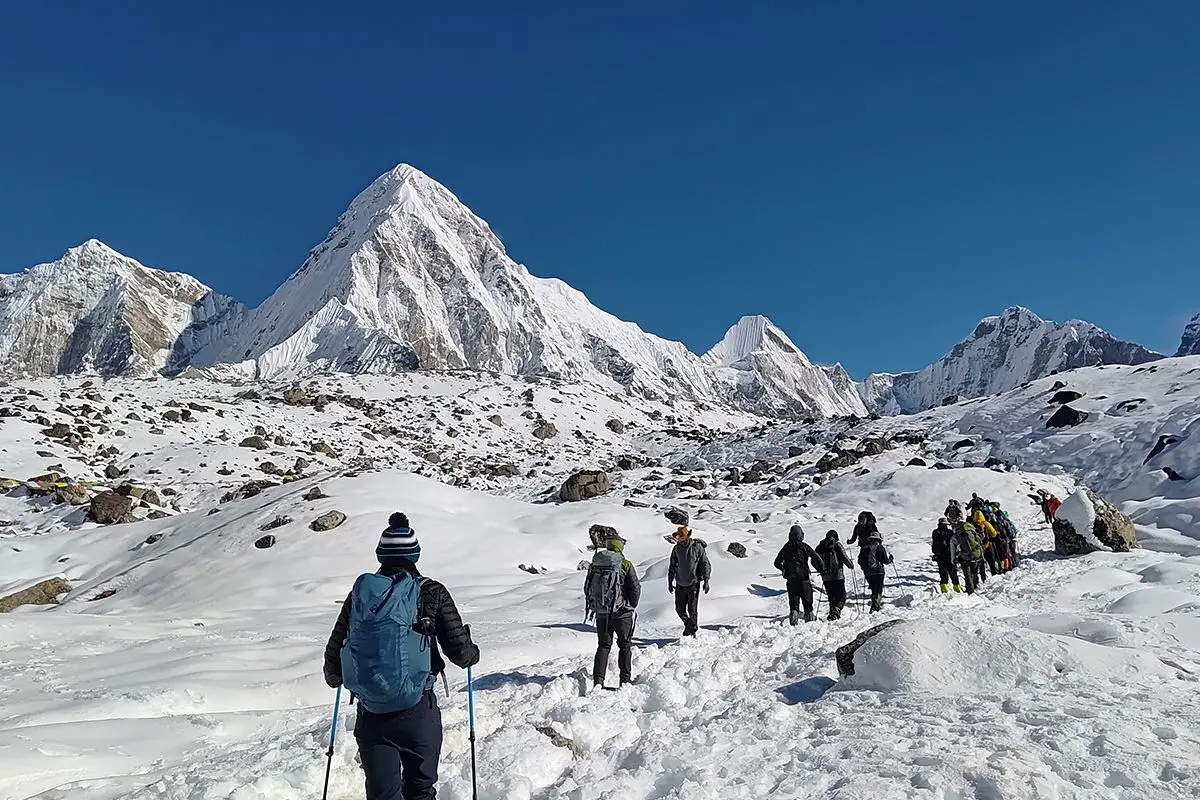
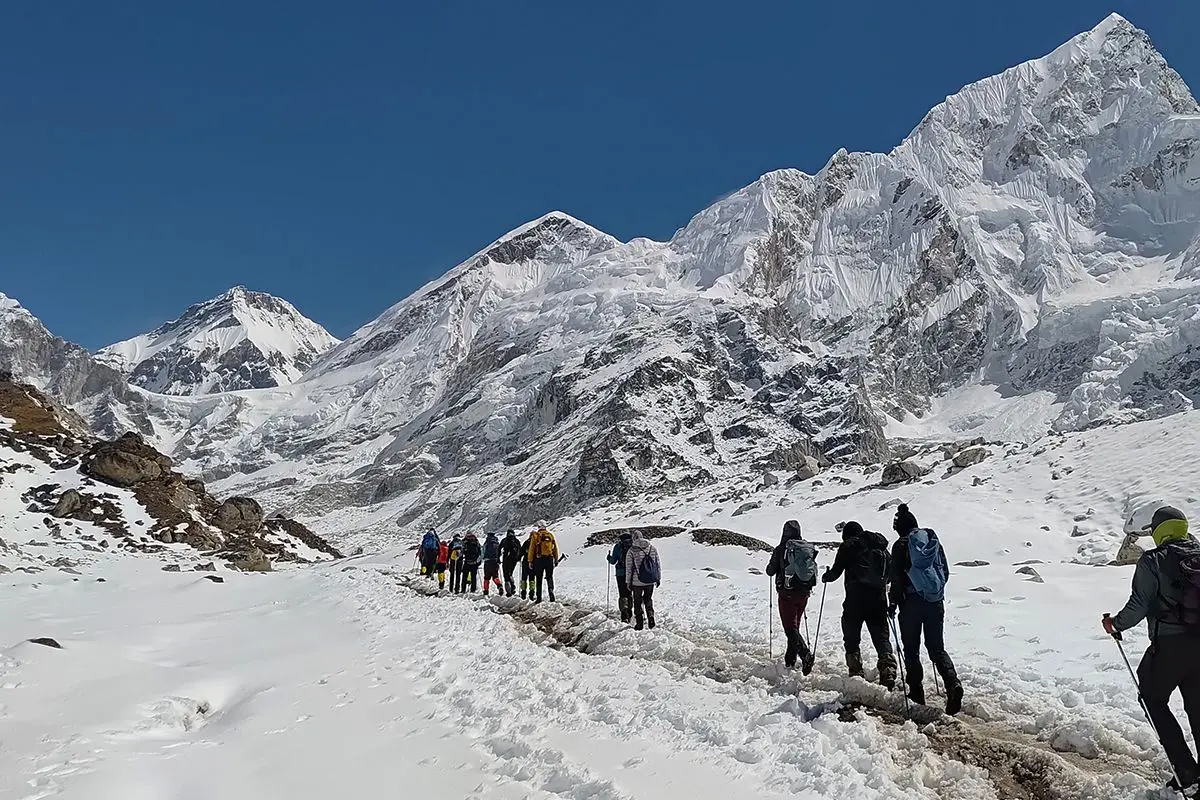
Everest base camp trail
Rest day in Dingbouche
Tengbouche Monastery

Everest Base Camp Trek with Helicopter Return -11 Days

48 Reviews in TripAdvisor
52 Reviews in Google

Walking to Everest Base Camp is the part everyone signs up for. Flying back out is the best way to avoid repeating the trails and saving your knees from the long descent.

Trekking Plus's 11-day Everest Base Camp Trek with helicopter return gives you both. Our itinerary takes you on a journey through Sagarmatha National Park, Sherpa villages like Namche Bazaar, old monasteries, and the climb to Base Camp (5,364m) and Kala Patthar (5,545m). After completing the Kala Patthar excursion, you head back to Gorak Shep for a helicopter transfer back to Kathmandu.

Trip Facts
Duration: 11 Days
Trip Grade: Moderate
Country: Nepal
Maximum Altitude: 5,545m
Starts: Kathmandu
Ends: Kathmandu
Group Size: Flexible (1 to 12 people)
Activities: Trekking and Adventure
Best Time: Autumn (Mid-September to Mid-December) and Spring (March to May)

The Everest Base Camp Trek with Helicopter Return offers travelers the chance to stand at the base of the world's highest mountain without the physically demanding multi-day descent that the classic route requires. By flying out from Gorak Shep, you significantly reduce your overall trekking time and spare your knees the strain of a steep downhill trail, while still completing every highlight of the traditional journey.

The route begins with a flight from Kathmandu (Manthali during peak season) to Lukla’s Tenzing-Hillary airstrip. From there, the trail follows the Dudh Koshi River through pine forest and across high suspension bridges to Namche Bazaar, the principal Sherpa trading hub.

Higher up, the trail passes Tengboche Monastery and the stone-walled fields of Dingboche, before reaching the Everest Base Camp (5,364 meters) and the sunrise viewpoint of Kala Patthar (5,545 meters).

Trekking Plus manages your logistics, ensuring a safe and hassle-free journey. We manage every detail, including domestic flights, regional permits, teahouse accommodation, experienced guides equipped with pulse oximeters to monitor acclimatization, and the arrangements for the return helicopter flight to Kathmandu.

Contact our team to begin planning your 11-day Everest Base Camp journey.

Why Book the Everest Base Camp Trek with Helicopter Return?

The Everest Base Camp Trek with Helicopter Return offers a balanced combination of active hiking and comfortable, modern travel. Ideal for those with limited time or for travelers wanting to avoid the strenuous descent, here are the key reasons to choose this itinerary:

Save Days of Downhill Walking: Steep, rocky descent trails over several consecutive days put real strain on the knees and joints. Flying directly out of Gorak Shep eliminates roughly four days of walking, allowing the trip to end on a comfortable, low-impact note.

Unmatched Aerial Views of the Khumbu Glacier: The helicopter departure from Gorak Shep offers a close-up view of the Khumbu Glacier and Icefall that isn't possible on foot. Flying past peaks like Everest, Lhotse, and Ama Dablam provides a rare perspective on the Himalayas few trekkers get to experience.

Structured Acclimatization for Safety: Moving too fast at altitude is one of the most common mistakes trekkers make. This itinerary builds in two dedicated rest days, one in Namche Bazaar and another in Dingboche, giving the body time to adjust before crossing 5,000 meters.

Professional Safety and Logistical Support: Flight schedules, permits, and helicopter arrangements in the Khumbu region require local expertise to manage well. Trekking Plus handles every detail, from fixed-wing flight bookings to certified guides carrying first-aid kits and oximeters for daily oxygen checks.

A Typical Day During the Everest Base Camp Trek

A typical day on the Everest trail starts early. The head start is non-negotiable as the sky remains clear, the weather is calmer, and you can avoid the long mule caravan on the trail. After waking up, you will pack your bags and head for breakfast. You need to leave for the trails by 8:00 AM.

Every step gains a little more elevation, and your guide keeps the pace relaxed on purpose. You will be reminded to drink water and maintain a comfortable pace to avoid risks of altitude. Remember, rushing at this altitude is a recipe for disaster, so slow and steady wins here.

The morning hike lasts approximately 3 to 4 hours, with time to take photos, watch yak trains pass, and take in the scale of the peaks around you. You will stop for lunch at a trailside teahouse at around midday.

While the menu boasts a wide variety of food, we recommend Dal Bhat for guaranteed energy for the rest of the day’s trek. For those wanting to try something different, you can try pasta, noodles, vegetable soup, or any other dish the menu offers.

Afternoons are shorter, and you'll typically reach your lodge by mid-afternoon. After checking into your mountain lodge, you can head to the heated common room, trade stories with other trekkers, and enjoy a hearty dinner. Before bed, your guide runs through tomorrow's plan and performs an oximeter check.

Cost of the Everest Base Camp Trek with Helicopter Return 2027/2028: Permits, Guides, and Transport

The Everest Base Camp Trek with Helicopter Return is a premium Himalayan travel package, largely because of the helicopter flight out of Gorak Shep and the regional fixed-wing flights built into the route.

Pricing covers deluxe hotel nights in Kathmandu, teahouse accommodation on the trail, all meals during the trek, a licensed guide, professional porters, conservation permits, and every stage of ground and air transport.

Private helicopter charters and room upgrades in Namche or Kathmandu are also available on request.

2027/2028 Nepal Everest Base Camp Trek with Helicopter Return Highlights

  • Fly from Kathmandu or Manthali to Lukla, enjoying a scenic flight over the green foothills of Nepal.
  • Stand at the historic Everest Base Camp at 5,364 meters, directly next to the famous Khumbu Icefall.
  • Reach the top of Kala Patthar at 5,545 meters to witness a sunrise over Mount Everest, Lhotse, and Nuptse.
  • Board a helicopter at Gorak Shep for a flight back down the valley, saving days of physical strain on the descent.
  • Spend essential acclimatization days in the active hubs of Namche Bazaar and Dingboche to adjust safely to the high altitude.
  • Visit the Tengboche Monastery, the largest spiritual center in the Khumbu region, offering clear views of Ama Dablam.
  • Trek through the diverse landscapes and alpine forests of Sagarmatha National Park, a UNESCO World Heritage site.
  • Experience the authentic culture, warm hospitality, and unique mountain lifestyle of the local Sherpa communities.

Customized Everest Base Camp Trek Nepal 2027/2028

Trekking Plus understands that every traveler has unique physical goals and scheduling needs. We can adjust the Everest Base Camp itinerary to align with your personal preferences.

Depending on your requirements, we can upgrade your accommodation to luxury lodges in Namche Bazaar, choose premium hotels in Kathmandu, or add extra rest days if you prefer a more relaxed pace. Additionally, this trek can be combined with visits to the Gokyo Lakes or the high passes of the region.

Share your travel plans with our team to design a personalized Everest itinerary.

Itinerary Overview and Route Map

Day 1:Arrival in Kathmandu
Day 2:Fly from Kathmandu or Manthali to Lukla and Trek to Phakding
Day 3:Trek from Phakding to Namche Bazaar
Day 4:Rest and Acclimatization Day in Namche Bazaar
Day 5:Trek from Namche Bazaar to Deboche via Tengboche
Day 6:Trek from Deboche to Dingboche
Day 7:Rest and Acclimatization Day in Dingboche
Day 8:Trek from Dingboche to Lobuche
Day 9:Trek to Gorak Shep and Hike to Everest Base Camp
Day 10:Hike to Kala Patthar and Fly to Kathmandu via Lukla by Helicopter
Day 11:Final Departure

Everest Base Camp Trek with Helicopter Return -11 Days Detailed Itinerary

Day 1

Arrival in Kathmandu

Upon your arrival at Tribhuvan International Airport in Kathmandu, our representative will meet you outside the arrivals terminal and transfer you directly to your hotel. Later that day, you'll attend a pre-trek briefing to go over your gear, meet your guide, and cover the final details before an early night.

Max Altitude: 1,400m (4,593ft)
Meals: Dinner
Duration: Airport transfer
Accommodation: Deluxe hotel
Day 2

Fly from Kathmandu or Manthali to Lukla and Trek to Phakding

Today, an early flight takes you to Lukla. During peak seasons, expect a change in itinerary as flights operate from Manthali in Ramechhap due to air traffic restrictions in Kathmandu. After landing in Lukla, you will meet your porter team and begin the descent toward the Dudh Koshi River, passing quiet Sherpa settlements on the way to Phakding.

Max Altitude: 2,652m (8,700ft)
Meals: B,L,D
Duration: 30-minute flight and 3-4 hours trek
Distance: 9 KM
Accommodation: Mountain Lodge
Day 3

Trek from Phakding to Namche Bazaar

We’ll have breakfast in Phakding before gearing up for the trek to Namche Bazaar, the biggest sherpa village in Nepal. Our trail takes us first over the Dudhkoshi River via a long suspension bridge, and then through a beautiful pine forest to Monjo, about two hours away. Soon thereafter, we will approach the entrance to Sagarmatha National Park for a brief permit check and then descend to Dudh Kosi River (spotting Mani stones along the way!) en route to Jorsale. Lunch will be served here, and then it’s uphill to Namche. Our path along the riverbank is flanked by two crossings, one of which is the Hillary Suspension Bridge. It’s a tough climb up the hill to our resting place, but you’ll be rewarded in Namche Bazaar with your first glimpse of Everest in its majesty.

Max Altitude: 3,440m (11,286ft)
Meals: B,L,D
Duration: 5-6 hrs
Distance: 10-12 KM
Accommodation: Mountain Lodge
Day 4

Rest and Acclimatization Day in Namche Bazaar

To help your body adapt to the thinner air, you will spend a rest day in Namche Bazaar. This rest day helps your body adjust to thinner air. You can hike up to the Everest View Hotel for panoramic views of Everest, Ama Dablam, and Lhotse, or spend the day exploring the Sherpa Culture Museum and local shops. Keep camera batteries close to your body, since the cold drains them fast.

Max Altitude: 3,880m (12,729ft)
Meals: B,L,D
Duration: 3-4 hours optional hike
Distance: 5.4 km / 3.4 miles
Accommodation: Mountain Lodge
Day 5

Trek from Namche Bazaar to Deboche via Tengboche

The day begins with a trek along the scenic ridge with wide mountain views before dropping to Phunki Thenga. From there, a steady climb through rhododendron forest brings you to Tengboche, home to the region's largest monastery. From Tengboche, a short descent brings you to the quieter village of Deboche.

Max Altitude: 3,860m (12,664ft)
Meals: B,L,D
Duration: 6-7 hrs
Distance: 12 KM
Accommodation: Mountain Lodge
Day 6

Trek from Deboche to Dingboche

The trail crosses the Imja Khola and passes through Pangboche, with its stone houses and terraced fields. Further into the Imja Valley, trees thin into alpine scrub and open terrain, and the day ends with a gradual climb into the high-altitude settlement of Dingboche.

Max Altitude: 4,410m (14,468ft)
Meals: B,L,D
Duration: 5-6 hrs
Distance: 11 KM
Accommodation: Mountain Lodge
Day 7

Rest and Acclimatization Day in Dingboche

This second planned rest day is essential for your safety. Acclimatization matters today, since you're about to cross 5,000 meters.

Instead of spending the day in your mountain lodge, you will take part in active recovery. You will take on a short, steep hike up Nangkartshang Peak with rewarding views of Makalu, Ama Dablam, and Lhotse.

Max Altitude: 5,083m (16,676ft)
Meals: B,L,D
Duration: 2-3 hours optional hike
Accommodation: Mountain Lodge
Day 8

Trek from Dingboche to Lobuche

Today, the trail climbs gently along the Khumbu Glacier's moraine, with a break at Thukla before the steep Thukla Pass, marked by stone memorials to climbers lost on Everest. Beyond that, the terrain levels out somewhat as you cross rocky ground to the small outpost of Lobuche.

Max Altitude: 4,940m (16,207ft)
Meals: B,L,D
Duration: 6-7 hrs
Distance: 12
Accommodation: Mountain Lodge
Day 9

Trek to Gorak Shep and Hike to Everest Base Camp

You will set off early across the rough moraine of the Khumbu Glacier to reach Gorak Shep. After a quick lunch, you'll continue on to Everest Base Camp itself, standing at the foot of the world's highest peak with the Khumbu Icefall in view, before heading back to Gorak Shep for a cold, memorable night.

Max Altitude: 5,364m (17,598ft)
Meals: B,L,D
Duration: 7-8 hrs
Distance: 15 KM
Accommodation: Mountain Lodge
Day 10

Hike to Kala Patthar and Fly to Kathmandu via Lukla by Helicopter

You will begin with a pre-dawn climb up the steep, cold slopes of Kala Patthar. Upon reaching the summit, also the highest point of the trek, you are rewarded with sunrise over Everest, Lhotse, and Nuptse. After spending some time, you will descend to Gorak Shep for breakfast. Here, you'll board a helicopter back down the valley, stopping briefly in Lukla to refuel before continuing to Kathmandu.

Max Altitude: 5,545m (18,192ft)
Meals: B,L
Duration: 3-4 hours hike and 1-hour helicopter flight
Accommodation: Deluxe Hotel
Day 11

Final Departure

After breakfast, you can spend your remaining hours resting or picking up souvenirs in Thamel. Our representative meets you at the hotel and transfers you to Tribhuvan International Airport for your flight home, or helps arrange any extended travel plans in Nepal.

Max Altitude: 1,400m (4,593ft)
Meals: B
Duration: Airport transfer
Accommodation: Hotel (Excluded)
Are you still confuse from where to start? Trekking Plus has solutions for this.

Cost Details

Includes

  • Airport transfers for international arrivals, departures, and domestic flight schedules.
  • Two nights of deluxe hotel accommodation with breakfast in Kathmandu.
  • Standard teahouse accommodation on a twin-sharing basis during the trek.
  • Three meals a day (Breakfast, Lunch, and Dinner) along with tea or coffee during meals on the trek.
  • An experienced, licensed, English-speaking trekking guide and professional porters (1 porter for every 2 trekkers, carrying up to 18 kg total).
  • Guide and porter salaries, insurance, meals, and lodging.
  • All required national park permits and local entry permits.
  • Flight tickets from Kathmandu or Manthali to Lukla.
  • Helicopter flight from Gorak Shep to Kathmandu (including a brief refueling stop in Lukla).
  • Trekking Plus water purification tablets, trekking map, and first-aid kit with basic medication.
  • All official expenses, government taxes, and VAT.

Excludes

  • International flight tickets and Nepal entry visa fees.
  • Personal trekking gear and cold-weather clothing.
  • Travel insurance (compulsory; must cover high-altitude helicopter evacuation).
  • Lunches and dinners in Kathmandu.
  • Personal expenses on the trail, such as laundry, hot showers, Wi-Fi, device charging, and bottled beverages.
  • Tips and gratuities for the guide and porters.
  • Any services or meals not mentioned in the inclusion list.

Equipment List for Everest Base Camp Trek with Helicopter Return -11 Days

What to Pack for the 11-Day Everest Base Camp Trek?

The Everest region experiences a wide range of temperatures, from warm, humid conditions at lower elevations to freezing temperatures well below zero at Gorak Shep.

Here is a list of recommended gear and clothing for your trek:

Head and Face Protection

  • Warm wool or fleece hat
  • Sun hat or cap
  • UV-protection sunglasses (essential for high-altitude glare)
  • Sunscreen and lip balm (SPF 30 or higher)
  • Lightweight neck gaiter or buff

Body Clothing

  • Moisture-wicking base layers (2-3 pairs)
  • Fleece jacket or warm sweater
  • Waterproof and windproof outer jacket
  • Warm down jacket (available from Trekking Plus if needed)
  • Lightweight trekking shirts (3 pairs)
  • Trekking pants (2 pairs)
  • Thermal underwear for cold nights

Lower Body and Footwear

  • Comfortable, waterproof trekking boots (ensure they are well broken in)
  • Sandals or light shoes for the teahouses
  • Thick wool hiking socks (4-5 pairs)
  • Lightweight gaiters (useful if there is snow on the high trail)

Hand Protection

  • Lightweight inner gloves
  • Windproof, insulated outer gloves

Essential Trekking and Safety Gear

  • Daypack (25-30 liters) to carry your daily essentials
  • Duffel bag (provided by Trekking Plus) for your main luggage
  • Four-season sleeping bag (rated to -15°C or colder)
  • Adjustable trekking poles
  • Headlamp with extra batteries (keep batteries inside your sleeping bag at night to prevent cold drain)
  • Reusable water bottles or a hydration bladder
  • Personal toiletries and basic first-aid items
  • Nepalese Rupees in cash for personal trail expenses

Essential Information

When is the Best Time for the Everest Base Camp Trek with Helicopter Return 2027/2028?

Choosing the right season matters for stable flight conditions and clear views of the high peaks. Autumn, mid-September through December, is the most popular option if you want dry weather and comfortable trekking days. Skies stay exceptionally clear during this time, which matters a lot for both the Lukla flight and the helicopter return.

Spring, March to May, is another great time for this trek. Temperatures are warmer, and the lower forests fill with blooming rhododendrons and wildflowers. Afternoon clouds can roll in sometimes, but mornings are usually clear with excellent visibility. We'd recommend booking early during these seasons, since helicopter and lodge availability fills up fast.

How Difficult is the Nepal Everest Base Camp Trek?

The Everest Base Camp Trek is graded as moderate. While the helicopter flight removes the physical demand of the multi-day descent, climbing to a maximum altitude of 5,545 meters remains a significant challenge.

Who can go on the Everest Base Camp Trek with Helicopter Return in Nepal?

This trek is suitable for a wide range of outdoor enthusiasts. It is an excellent option for:

  • Active hikers who want the classic Everest Base Camp trail without the knee strain of walking all the way back down
  • Travelers with limited holiday time who still want to reach a high-altitude Himalayan base camp efficiently
  • Nature lovers and photographers who want both a ground-level trek and a dramatic aerial view of the Everest region
  • Anyone in good physical condition looking for a well-supported, safety-focused trek into high altitude regions